

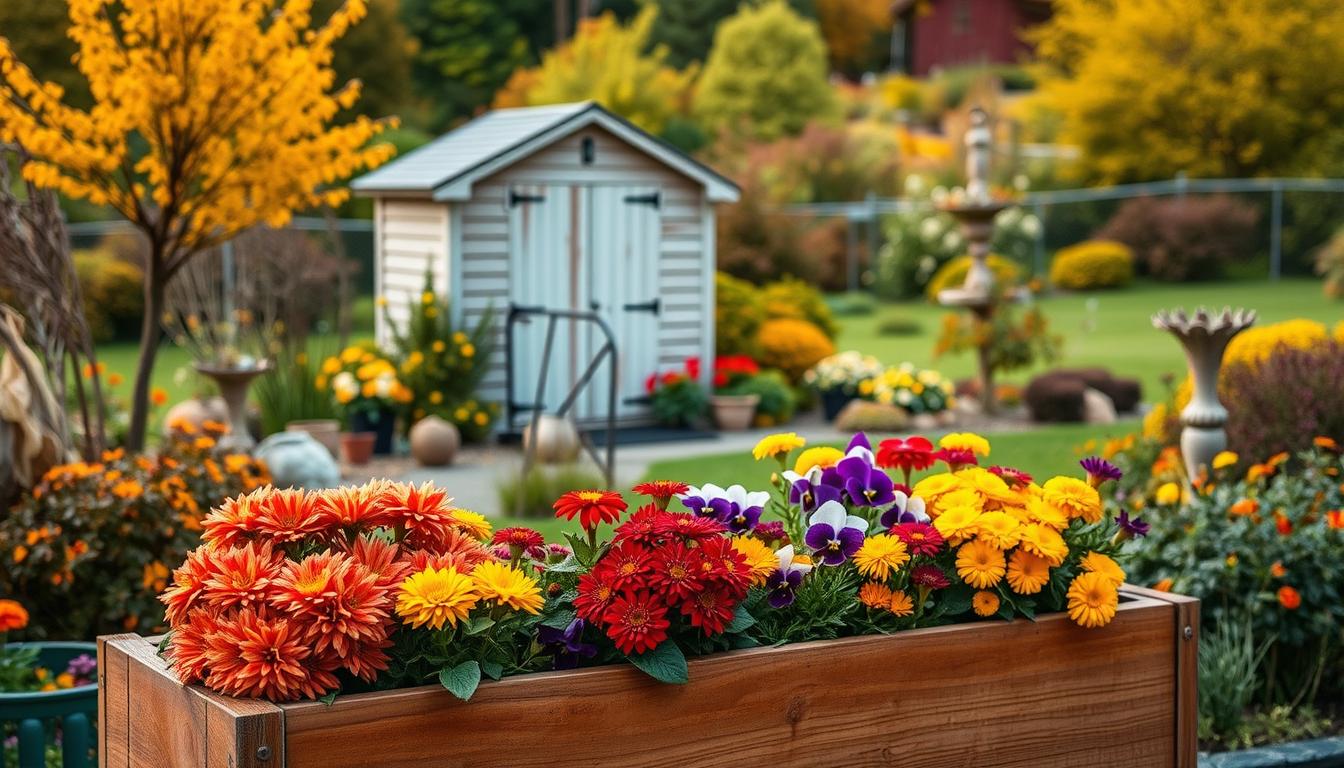
As autumn comes, many are ready to start gardening. Creating a beautiful garden is rewarding. Fall is the perfect time to begin because the weather is cooler and it rains more.
Autumn is great for growing many plants, like leafy greens, herbs, and flowers. It’s also a chance to enhance your outdoor space and make it more welcoming.
Key Takeaways
- Start your gardening journey in autumn for optimal results
- Choose beginner-friendly plants like leafy greens and herbs
- Enhance your outdoor space with beautiful flowers and foliage
- Take advantage of the cooler weather and increased rainfall
- Create a welcoming atmosphere with your garden
The Magic of Fall Gardening
As summer’s heat fades, fall gardening becomes a great chance for beginners. The autumn season has mild temperatures and more rain. This makes it perfect for gardening.
Why Autumn Is Ideal for Garden Projects
Autumn’s weather is great for gardening. The cooler air and more moisture help plants grow well. It’s a perfect time for simple autumn gardening ideas and projects.
Benefits of Starting Your Garden Journey in Fall
Starting in fall has many advantages. It lets beginners avoid summer’s heat and winter’s cold. They can also grow cool-season crops and prepare the soil for next year. By starting in autumn, gardeners can follow beginner gardening tips for autumn and set up for success.
Setting Realistic Expectations for Beginners
For new gardeners, it’s key to have realistic goals. Fall gardening can include simple tasks like cleaning up or building raised beds. Beginners should start with autumn garden projects for novices and then tackle harder tasks as they get more confident.
- Start with small, manageable projects to build confidence.
- Focus on improving soil quality through composting and mulching.
- Explore simple autumn gardening ideas to enhance your garden’s aesthetic.
Essential Tools and Materials for Your Fall Garden Projects
To start your easy DIY fall garden projects, you’ll need some key tools and materials. The right equipment makes the process fun and ensures your projects are done well.
Must-Have Basic Tools for Beginners
Beginners should start with the basics. Gardening gloves, a trowel, and a rake are essential. They help with many tasks, from planting to cleaning up.
Budget-Friendly Equipment Options
You don’t have to spend a lot to begin your fall gardening. Look for affordable options at local stores or online. Many DIY gardening projects can be done with little cost. You can always add more tools as you get more experience.
Safety Gear and Protective Clothing
When gardening, safety is key. Wear protective gear like gloves, safety glasses, and sturdy shoes to avoid injuries. Also, dress for the weather to stay comfortable while gardening.
Gloves and Footwear Recommendations
For fall gardening, choose gloves that are waterproof and have a good grip. Wear sturdy, waterproof boots or shoes with good traction to keep your feet dry.
Weather-Appropriate Accessories
Dressing in layers is smart for fall gardening, as the weather can change. Wear breathable clothes and bring a hat and sunscreen to protect against the sun.
Planning Your First Fall Garden
Starting your first fall garden can be very rewarding. It’s a great way to begin your gardening journey. Begin with a solid plan to make sure your garden does well.
Assessing Your Garden Space and Sunlight
First, look at your garden space and how much sunlight it gets. Most plants need at least 6 hours of direct sunlight a day. Think about how you can arrange your yard for your beginner-friendly fall garden DIY projects.
Understanding Your Hardiness Zone
Knowing your hardiness zone is key to picking the right plants. Use the USDA Plant Hardiness Zone Map to find your zone. Then, choose plants that will do well in your area.
Creating a Simple Garden Layout
Having a simple garden layout is important for success. Start by making a basic sketch of your garden.
Sketching Your Garden Plan
Draw a simple outline of your garden area. Include any features like trees or paths. This helps you see your space and plan better.
Considering Water Access Points
Make sure your garden design has easy water access. This makes caring for your plants easier and keeps them healthy.
By following these steps, you can create a beautiful fall garden, even if you’re new to gardening. Adding easy fall outdoor projects for new gardeners will help you start off right.
Easy Fall Garden Projects for Beginners
Fall gardening is perfect for beginners. It offers simple yet impactful projects. These activities beautify outdoor spaces and prepare gardens for the next year.
Weekend Projects That Transform Your Space
Looking to use your weekends wisely? There are many garden projects that can be done quickly. Building a raised garden bed is a great start. It improves soil drainage and keeps soil warm for fall planting.
Another idea is to create a garden pathway with stones, gravel, or brick pavers. This adds beauty and makes navigating the garden easier.
Low-Maintenance Project Ideas for Busy Gardeners
Not everyone has lots of time for gardening. For busy folks, mulching is a simple way to keep soil moist and control weeds. Installing a drip irrigation system also saves time and ensures plants get the right moisture.
Budget-Friendly Projects Under $50
Gardening doesn’t have to cost a lot. There are many budget-friendly projects. For example, upcycling household items into garden decorations or planters is both affordable and adds a personal touch.
DIY garden markers from wood, stone, or recycled materials are fun and cheap.
Upcycling Household Items for Garden Use
Upcycling gives old items new life. Old boots can become quirky planters, and wooden crates can be garden planters or storage. This approach reduces waste and adds unique touches to your garden.
DIY Garden Markers and Decorations
Making your own garden markers and decorations is rewarding. Use natural materials like stones, sticks, and pinecones for markers that are both useful and beautiful. Making your own garden decorations, such as wind chimes or stakes, adds a personal touch to your space.
Creating a Fall Vegetable Garden
Autumn is a great time for beginners to start a vegetable garden. The cooler weather makes it easier to grow cool-season crops. This means less stress for new gardeners.
Best Cool-Season Vegetables for Beginners
Some top vegetables for fall gardens are broccoli, cauliflower, carrots, spinach, and kale. They are hardy and easy to grow, perfect for beginners.
- Broccoli and cauliflower thrive in fall, offering a nutritious harvest.
- Carrots need little care and grow well in cooler temperatures.
- Spinach and kale can handle light frosts, making them great for fall gardens.
Step-by-Step Planting Guide
Planting a fall vegetable garden has several steps:
- Find a spot that gets at least 6 hours of sunlight a day.
- Make the soil better by adding compost or manure.
- Pick the vegetables you want to grow and follow the seed packet instructions.
- Water the soil well after planting and keep it moist during germination.
Simple Watering and Maintenance Schedule
Keeping your garden watered is key. Most veggies need 1-2 inches of water a week, from rain or irrigation.
Regular care includes:
- Weeding to stop veggies from competing for nutrients.
- Fertilizing with a balanced fertilizer for healthy growth.
- Watching for pests and diseases and acting fast if needed.
Protecting Vegetables from Early Frost
As fall gets closer, frost risk goes up. Use row covers or frost blankets to protect plants on frosty nights.
Harvesting Tips for Maximum Yield
Harvest veggies at the right time to get the most. Check seed packets or gardening guides for each veggie’s best time. Regular picking also helps plants keep growing.
For example, broccoli and cauliflower should be picked when buds are tight. Leafy greens like spinach and kale can be picked continuously, letting the inside leaves grow.
Designing a Colorful Autumn Flower Bed
As autumn nears, turning your garden into a colorful display is a fun task. This season is perfect for making a beautiful flower bed. It will not only make your garden look great but also attract local wildlife.
Fool-Proof Fall Flowers for Beginners
Choosing the right flowers is key for a great autumn flower bed. Start with easy-to-grow flowers like asters, chrysanthemums, and sedum. These plants are beautiful and need little care.
Creating Visual Impact with Strategic Planting
To make your flower bed stand out, think about plant height, color, and texture. Place taller plants like sunflowers or cosmos at the back. Shorter plants like pansies or cyclamen go at the front. Mixing colors and textures adds depth and interest.
Combining Perennials and Annuals for Long-Term Success
Using both perennials and annuals keeps your flower bed lively all year. Perennials like coneflowers and black-eyed Susans come back every year. Annuals like marigolds and zinnias let you change your garden’s look each year.
Color Schemes That Pop in Fall Light
Autumn’s soft light makes warm colors pop. Choose oranges, yellows, and reds for a cozy feel. Blues and purples offer a cool contrast to the autumn leaves.
Planting Bulbs Now for Spring Surprises
While enjoying autumn, plant bulbs like tulips and daffodils for spring. This planning keeps your garden exciting all year.
Fall Mulching and Soil Improvement Projects
As the weather cools, fall gardening projects like mulching and soil improvement become essential for a thriving garden. These simple projects not only enhance the aesthetic appeal of your garden but also contribute to its overall health.
Starting a Simple Compost System
Composting is a straightforward way to improve soil quality. By decomposing organic materials, you create a nutrient-rich soil amendment. To start, collect kitchen scraps, leaves, and grass clippings in a designated compost bin. Ensure a mix of “green” (nitrogen-rich) and “brown” (carbon-rich) materials for optimal decomposition.
Mulching Techniques for Beginners
Mulching helps retain moisture, suppress weeds, and regulate soil temperature. For beginners, applying a 2-3 inch layer of organic mulch (like wood chips or straw) around plants is a simple yet effective technique.
Testing and Amending Your Soil
Understanding your soil’s pH and nutrient levels is crucial. Use a soil testing kit to determine your soil’s condition. Based on the results, you can amend your soil with appropriate fertilizers or lime to create a more favorable growing environment.
Leaf Mulching: Turning Waste into Garden Gold
Leaf mulching is an eco-friendly way to reuse fallen leaves. Simply shred the leaves and use them as mulch or add them to your compost pile. This practice not only reduces waste but also enriches your soil.
Cover Crops for Soil Health
Planting cover crops in the fall can significantly improve soil health. Crops like clover or rye help prevent erosion, add nutrients, and attract beneficial insects. Incorporating cover crops into your fall garden projects can lead to a more resilient garden ecosystem.
| Project | Benefits | Materials Needed |
|---|---|---|
| Composting | Improves soil quality, reduces waste | Compost bin, kitchen scraps, leaves |
| Mulching | Retains moisture, suppresses weeds | Organic mulch (wood chips, straw) |
| Cover Crops | Prevents erosion, adds nutrients | Cover crop seeds (clover, rye) |
By incorporating these fall mulching and soil improvement projects into your gardening routine, you’ll be well on your way to creating a more vibrant and sustainable garden.
Fall Garden Cleanup and Winter Preparation
Fall garden cleanup is more than just tidying up. It’s crucial for your garden’s success next year. Your garden must be protected from winter’s harsh conditions to bloom again in spring.
Essential Cleanup Tasks by Priority
Start by removing dead plants and debris. This helps prevent diseases and pests. Prioritize tasks based on urgency and importance. Remove diseased plants to stop disease spread.
- Clear dead plants and debris
- Dispose of diseased or infested materials
- Organize garden tools and equipment
Protecting Plants from Winter Damage
To protect your plants, apply mulch or straw. This insulates the soil and keeps roots from freezing. Evergreen branches or burlap can also shield sensitive plants from harsh winds and frost.
Preparing Garden Beds for Spring Success
Get your garden beds ready for spring by adding compost. This improves soil structure and fertility. It’s key for ensuring your garden is ready to flourish when warmer weather returns.
Tool Cleaning and Storage
Clean your tools well to remove dirt and debris. Then, store them in a dry place to prevent rust and deterioration.
Creating Winter Interest in Your Garden
Add elements like holly or winter berries for visual interest in winter. This beautifies your space and provides a home for wildlife.
By following these steps, you’ll have a healthy, vibrant garden come spring. All your hard work will be worth it.
Conclusion: Embracing Your Fall Gardening Journey
As the seasons change, starting your gardening journey with simple autumn ideas is exciting. With the right tips for beginners, you can turn your outdoor space into a lively garden.
By following the steps in this article, you’re on your way to a beautiful fall garden. From preparing your soil to picking the right plants, every step is important. It makes your gardening journey fun and rewarding.
Remember, gardening is a journey. It’s okay to start small and learn as you go. With each new project, you’ll become more confident and skilled.
So, start today and enjoy the many rewards of fall gardening. Whether you’re growing veggies or creating a stunning flower bed, gardening brings you closer to nature. It also makes your outdoor space better.
