

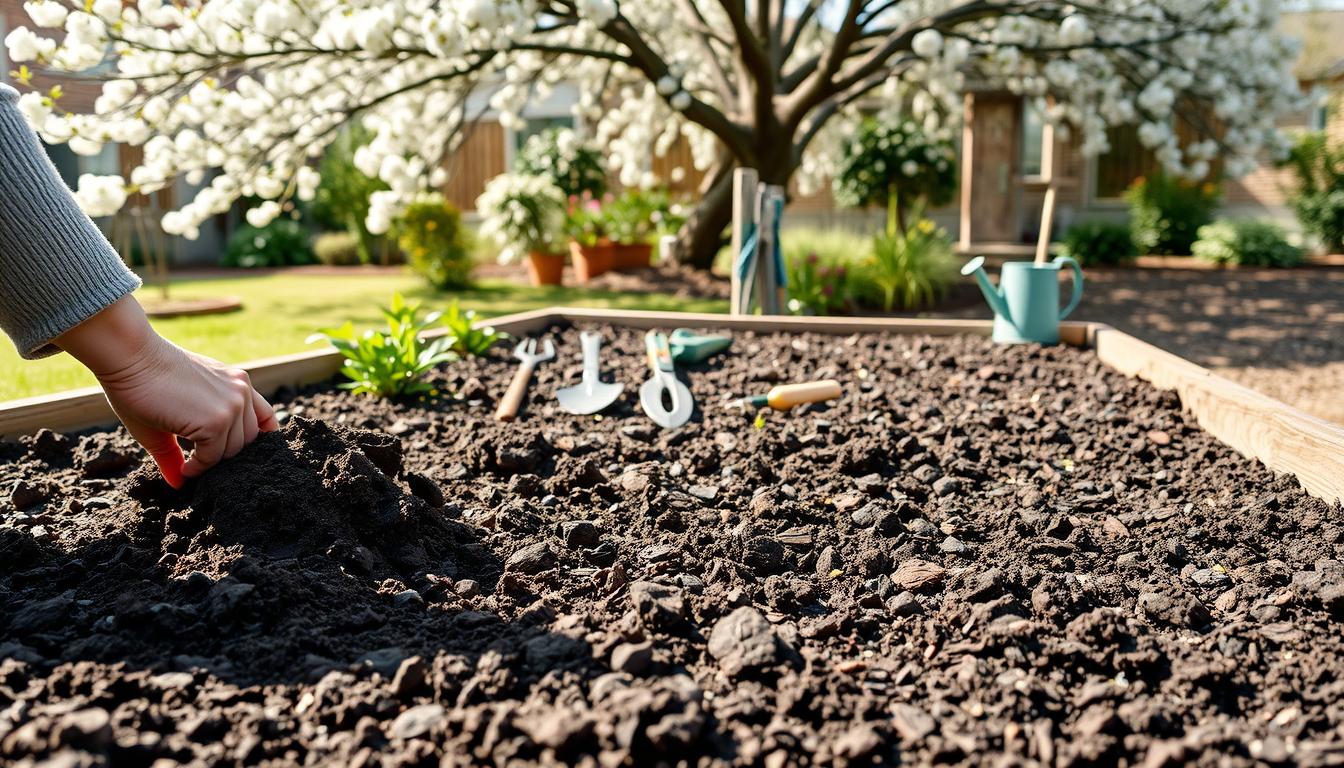
As winter fades, gardeners look forward to spring. But, moving from winter to spring is tough for raised bed gardens. Cold, snow, and ice can harm the soil and garden health.
To make your raised beds ready for spring, it’s key. Inspecting and fixing your beds will help your garden thrive. This way, you can revitalize your garden for the new season.
Key Takeaways
- Inspect your raised beds for damage caused by winter weather.
- Repair and replace any damaged components to ensure garden health.
- Prepare the soil for spring planting by loosening and aerating it.
- Plan your spring garden layout to maximize space and productivity.
- Start seedlings indoors to get a head start on the growing season.
Understanding Winter’s Impact on Raised Beds
Winter can really hurt the structure and soil of raised beds. It’s important to know how it affects your garden before spring.
Common Winter Damage to Raised Beds
Raised beds face many winter problems. Two big ones are frost heaving and wood deterioration.
Frost Heaving Effects
Frost heaving happens when soil freezes and gets bigger. This can push plants out of place and harm the bed.
Wood Deterioration Issues
Wood in raised beds can rot and weaken from moisture and cold. This makes the bed’s frame less strong.
How Freezing Affects Soil Structure
Freezing can change how soil works. It can make the soil compacted and lose nutrients.
Soil Compaction Concerns
Soil that’s compacted has less air and water. This is bad for plant roots.
Nutrient Leaching During Thaws
When the soil thaws, nutrients can wash away. This makes the soil less fertile.
| Winter Damage Type | Description | Impact |
|---|---|---|
| Frost Heaving | Soil expansion due to freezing | Plant displacement, structural damage |
| Wood Deterioration | Rot and decay from moisture and cold | Weakened bed frame |
| Soil Compaction | Reduced aeration and water penetration | Affects root growth |
| Nutrient Leaching | Loss of nutrients during thaw | Depleted soil fertility |
Tools and Materials Needed for Spring Preparation
To get your raised beds ready for spring, you’ll need the right tools and materials. It’s not just about cleaning up. You also need to make the soil fertile and strong for your plants.
Essential Garden Tools Checklist
Gardening needs many tools, each for a different task. For spring, focus on tools for soil work and checking soil conditions.
Hand Tools for Soil Work
Hand tools are key for soil prep. You’ll need a garden fork to turn over the soil, a trowel for mixing in amendments, and a cultivator to loosen tight soil.
Measuring and Testing Equipment
Testing your soil accurately is important. Use a soil test kit or send a sample to a lab for a detailed report.
Materials for Soil Amendment and Repair
Improving your soil and fixing raised beds is crucial. Use organic amendments and strong repair materials.
Organic Amendment Options
Compost, well-rotted manure, and leaf mold are great for soil. They make the soil better and more fertile.
Structural Repair Supplies
For fixing raised beds, use strong materials like cedar wood or recycled plastic. Make sure you have screws and brackets for solid repairs.
| Material | Description | Use |
|---|---|---|
| Compost | Rich in nutrients, improves soil structure | Soil amendment |
| Cedar Wood | Durable, resistant to rot and insects | Structural repair |
| Soil Test Kit | Measures pH and nutrient levels | Soil testing |
“The garden is a love song, a duet between a human being and Mother Nature.”
Assessing Your Raised Beds After Winter
Spring is the best time to check and fix your raised beds after winter. It’s important to see how they’re doing to keep them working well. This helps your garden grow healthy and strong.
Evaluating Structural Integrity
First, look at how your raised beds are holding up. Look for cracked or rotting boards, loose parts, or if the bed has moved. Make sure the frames are strong and there are no holes for pests or for soil to leak out.
Identifying Soil Compaction Issues
Soil can get compacted after winter, especially if it was walked on when wet. Dig gently with a fork to find compacted spots. If the soil is hard, it needs to be loosened to improve its health and drainage.
Checking for Pest Infestations and Disease
Winter can bring pests and diseases to your raised beds. Look for signs of overwintering pests and diseases.
Signs of Overwintering Pests
Search for eggs, larvae, or pests in the soil and on old plants. Common pests include slugs, snails, and certain insects.
Identifying Fungal Problems
Fungal diseases can stay in soil and on plants through winter. Look for mushrooms, fungal growth, or blackened plant tissue. Getting rid of infected parts can stop the disease from spreading.
By carefully checking your raised beds after winter, you can fix problems quickly. This gets your garden ready for a great growing season. Keeping up with maintenance is crucial to protecting plants from frost and keeping your garden healthy.
Cleaning and Clearing Winter Debris
As winter ends and spring begins, it’s time to clean your raised beds. This prepares your garden for a lively growing season. Clearing out winter debris is key to a healthy start for your spring garden preparation.
Removing Dead Plant Material
Begin by removing dead plants from your raised beds. This makes your garden look better and stops disease from spreading. Get rid of dead stalks, leaves, and roots, and throw them away to keep your garden clean.
Dealing with Weeds and Volunteer Plants
Weeds and volunteer plants can be a problem in spring. Some are good, but others take water and nutrients from your plants. Find out which weeds to remove and which to keep. Decide if you should pull them out by hand or use a weed killer.
Sanitizing Tools and Bed Frames
Cleaning your garden tools and bed frames is important to stop diseases from spreading.
Natural Sanitizing Methods
For a green way to clean, try vinegar or hydrogen peroxide. They kill many diseases and are better for the planet.
When to Replace Rather Than Clean
It’s sometimes better to replace than clean some garden parts. If your bed frames are badly damaged or your tools are broken, it’s time to get new ones. This keeps your garden healthy and productive.
| Task | Importance Level | Recommended Frequency |
|---|---|---|
| Removing Dead Plant Material | High | Annually |
| Dealing with Weeds | High | As needed, typically weekly during growing season |
| Sanitizing Tools and Bed Frames | Medium | At least once per season, or after handling diseased plants |
Preparing Raised Beds for Spring After Winter Freeze
Spring is the time to get your raised beds ready after a cold winter. As the soil warms up, check for damage and fix it. This will help your garden grow well.
Breaking Up Compacted Soil
Soil that’s too tight can stop water and air from getting in. This hurts plant roots. To fix this, you can try different ways to loosen the soil.
No-Till Methods for Soil Health
No-till gardening keeps the soil in good shape. It lets good bugs live in the soil. This makes the soil healthier.
When and How to Use a Broadfork
A broadfork is great for softening tight soil without digging it up. Use it when the soil is damp but not soggy.
Addressing Frost Heaving
Frost heaving can push plants out of the ground. To fix this, gently press the soil around the plants. Then, add organic stuff to keep the soil stable.
Repairing Winter Erosion
Winter erosion can take away soil and nutrients. To fix this, mix compost and topsoil. This will add back what was lost.
| Soil Amendment | Purpose | Benefits |
|---|---|---|
| Compost | Improves soil structure | Enhances drainage, aeration, and nutrient availability |
| Topsoil | Replenishes lost soil | Restores soil depth and fertility |
“The way to get started is to quit talking and begin doing.”
By taking these steps, you can get your raised beds ready for spring. This will help your garden grow strong and healthy.
Soil Testing and Analysis
Soil testing is key to getting your raised beds ready for spring. It helps you know what your soil needs. This way, you can make the right changes for better growing conditions.
DIY Soil Testing Methods
DIY soil testing kits are great for those who like to do things themselves. They can tell you about your soil’s pH and nutrients. But, they might not give you all the details that a lab can.
Professional Lab Testing Options
Professional labs can give you a full report on your soil. They check for nutrients, pH levels, and even contaminants. This info is super helpful for fine-tuning your soil.
Interpreting Test Results for Spring Planning
After getting your soil test results, you can start planning your spring garden. Knowing what your soil needs is key. It helps you pick the best crops and soil amendments.
Understanding pH Needs for Spring Crops
Each crop has its own pH preference. Most veggies like a slightly acidic to neutral soil pH (around 6.0-7.0). Getting your soil’s pH right can really help your crops grow better.
Nutrient Deficiency Indicators
Soil tests can show if your soil lacks certain nutrients. For example, yellow leaves might mean you need more nitrogen. Fixing these issues with the right amendments can make your plants healthier.
Adding Amendments and Nutrients
As winter fades, it’s time to revitalize your raised beds. This is a key step in getting your soil ready for spring. It ensures your soil is full of the nutrients it needs.
Organic Matter and Compost Integration
Adding organic matter and compost to your raised beds is essential. It makes the soil better, adds nutrients, and helps good microbes grow.
Homemade vs. Store-Bought Compost
You can make compost at home or buy it. Homemade compost lets you choose what goes in it and avoid bad stuff. Store-bought compost is easy to get and packed with nutrients.
Application Rates for Spring Beds
How much compost or organic matter you add depends on your soil. A good rule is to use a 2-3 inch layer. Mix it well into the top 6-8 inches of soil.
Balancing pH Levels for Spring Planting
Soil pH is important for plant growth. Testing your soil pH and adjusting it if needed is key for spring planting.
Organic and Conventional Fertilizer Options
Choosing between organic and conventional fertilizers depends on your gardening style. Organic fertilizers feed plants slowly, helping soil health. Conventional fertilizers give nutrients quickly.
Repairing and Reinforcing Bed Structures
After a harsh winter, it’s crucial to check and fix your raised bed garden’s structure. This ensures a great spring gardening season. Winter can damage raised beds, causing cracks and weakening joints.
Fixing Cracked or Warped Boards
Look for any damaged or warped boards in your raised beds. Replace any that can’t be fixed. For small cracks, use a waterproof sealant to stop further damage. Think about using weather-resistant materials like cedar or recycled plastic for new boards.
Strengthening Corners and Joints
Corners and joints can weaken over time. Use metal brackets or wooden stakes to make them stronger. Make sure the corners are well-fastened to keep the bed stable.
Upgrading Bed Materials for Longevity
Switching to durable materials can make your raised beds last longer. Here are some options:
- Cedar: Naturally rot-resistant and durable.
- Recycled plastic: Eco-friendly and long-lasting.
- Composite materials: Resistant to rot, insects, and weathering.
Weather-Resistant Material Options
Materials like cedar and recycled plastic last longer and need less upkeep. They fight off rot, insects, and weather damage better.
Cost-Benefit Analysis of Materials
Weather-resistant materials might cost more at first. But they save money over time by needing fewer repairs or replacements. Think about the long-term savings when picking materials for your raised beds.
Setting Up Irrigation Systems
As spring gets closer, setting up a good irrigation system is key for a healthy raised bed garden. It makes sure your plants get the right water, helping them grow well and produce more.
Inspecting and Repairing Winter Damage
Before you start a new irrigation system, check your old one for winter damage. Look for broken pipes, damaged emitters, and clogged filters. Fixing or replacing these parts will help your system work better.
Drip Irrigation Installation for Spring
Drip irrigation is a smart way to water raised beds. It sends water straight to the roots, cutting down on evaporation and runoff. To set up a drip system, first lay out the mainline tubing along your raised bed.
Water Conservation Techniques
Water conservation is important for gardening that’s good for the planet. Two good ways to save water in raised bed gardening are collecting rainwater and keeping moisture in the soil.
Rainwater Harvesting Systems
Rainwater harvesting means catching and storing rainwater for irrigation. You can do this by putting up rain barrels or cisterns to catch roof runoff.
Moisture Retention Strategies
Strategies to keep moisture in the soil, like mulching and using certain soils, help save water. Mulching keeps the soil cool and moist. Soils that hold moisture mean you don’t have to water as often.
| Irrigation Method | Water Efficiency | Cost |
|---|---|---|
| Drip Irrigation | High | Moderate |
| Sprinkler System | Medium | Low |
| Soaker Hose | High | Low |
Using these methods, you can make an efficient irrigation system. It will help your raised bed garden stay healthy and productive all spring.
Mulching and Protecting Your Beds
Protecting your raised beds with mulch is key to keeping the soil healthy after a freeze. Mulch acts as a shield against erosion, keeps moisture in, and stops weeds.
Choosing the Right Mulch for Spring
When picking mulch for spring, think about the type and how thick it should be. Organic mulches like wood chips, straw, or compost are good choices.
Organic vs. Inorganic Mulch Options
Organic mulches break down and make the soil better. Inorganic mulches like plastic or landscape fabric block weeds longer.
Mulch Depth Guidelines
Use a 2-3 inch layer of mulch. This keeps moisture in without drowning the plants.
Proper Mulching Techniques
Spread mulch evenly, leaving a gap around plant stems to avoid rot. Replenish mulch as needed during the growing season.
| Mulch Type | Benefits | Drawbacks |
|---|---|---|
| Organic (Wood Chips) | Improves soil health, retains moisture | May attract pests |
| Inorganic (Plastic) | Long-lasting, suppresses weeds | Does not improve soil health |
Creating Microclimate Protection for Early Planting
Row covers and cold frames shield plants from frost. Windbreaks protect them from strong winds.
Row Covers and Cold Frames
These offer extra protection for plants that are sensitive. They trap warm air and keep frost away.
Windbreak Solutions
Burlap or snow fencing can make good windbreaks. They help prevent soil erosion and plant damage.
Planning Your Spring Planting Schedule
Raised bed gardening fans know a good spring plan is key. As you get your garden ready, think about a few things to get the most from your garden.
Understanding Your Local Frost Dates
Knowing your local frost dates is very important. Frost dates tell you when it’s safe to plant outside without damage. Check with your local nursery or extension office for your area’s last frost date.
Early Spring Crops for Raised Beds
Early spring is great for cool-season crops in raised beds. Lettuce, spinach, peas, and radishes do well in cooler weather. You can plant these as soon as the soil is ready in late winter or early spring.
Succession Planting Strategies
Succession planting means planting small batches of seeds every few weeks. This keeps your harvest going all season. It’s especially good for beans, corn, and lettuce, which don’t take long to grow.
Companion Planting for Pest Management
Companion planting pairs plants to help each other grow better, fight pests, and taste better. For example, marigolds with tomatoes can keep nematodes away. Basil repels aphids and makes nearby veggies taste better.
Crop Rotation Principles
Crop rotation means changing what you grow in the same spot. It keeps the soil healthy and fights pests and diseases. You can switch between heavy feeders like tomatoes, light feeders like beans, and soil builders like legumes.
By knowing your frost dates, picking the right early crops, using succession planting, and companion planting, you can make your raised bed garden thrive.
Conclusion
As winter’s chill fades, it’s key to get your raised beds ready for spring. This article has shown you how to check and fix winter damage, clean up, and get the soil ready for growth.
Good raised bed care is more than just planting seeds. It means understanding how to tackle winter’s challenges. By loosening the soil, fixing frost damage, and adding nutrients, you help your plants grow well.
Gardening after a freeze needs careful planning and action. By following these steps, your raised beds will be ready for the new season. This will give your spring garden a strong start.
With the right planning and effort, you’ll soon have a rich harvest. Begin preparing your raised beds now. Get ready for a vibrant and successful spring garden.
