

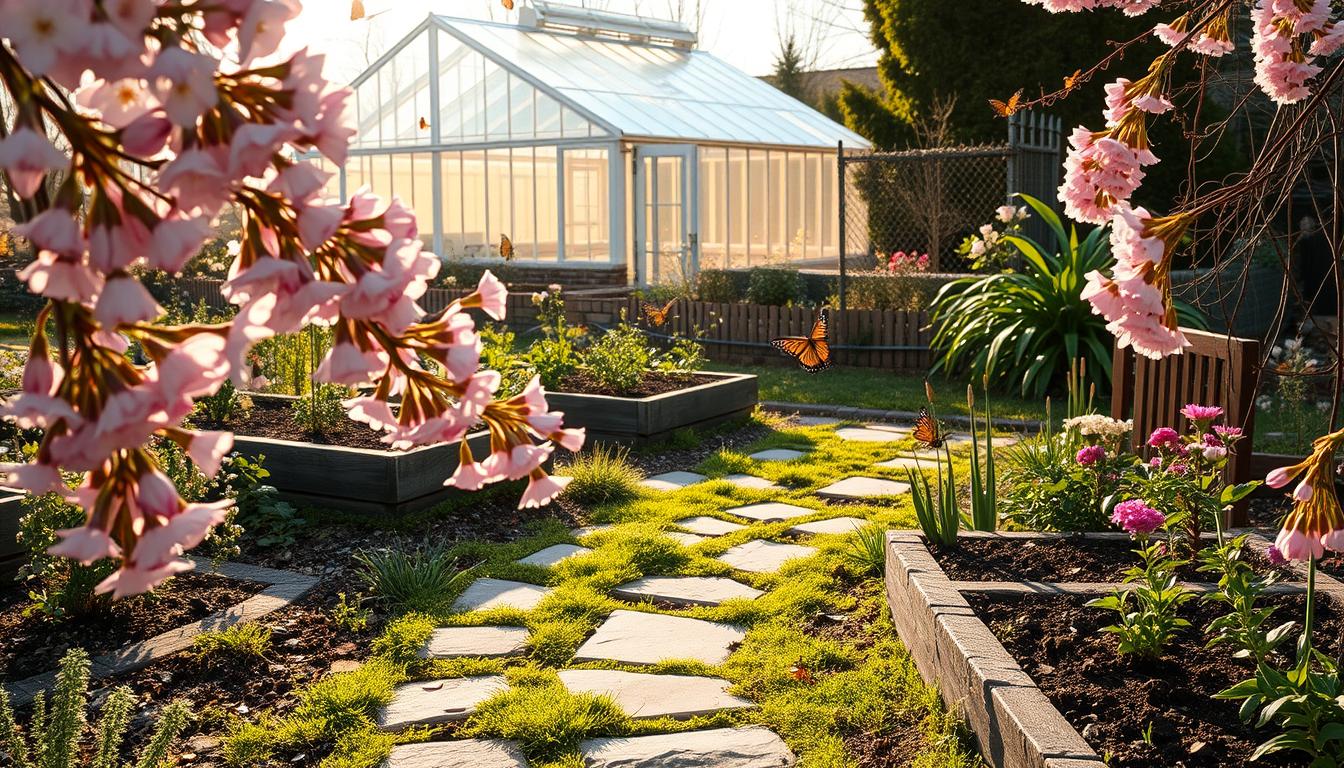
When winter arrives, many gardeners think their work is done. But this is the perfect time to start planning for spring gardening.
Preparing early means you’ll have a garden full of life and color. You’ll also have a garden that looks exactly how you want it. Good winter garden planning helps you jump into spring with ease and efficiency.
Key Takeaways
- Start planning your garden during winter for a successful spring season.
- Prepare your garden for a bountiful harvest and beautiful blooms.
- Effective planning ensures a well-designed garden.
- Get a head start on the new season with winter garden planning.
- A smooth transition into spring makes gardening more productive.
The Benefits of Winter Garden Planning
The winter season is a great time for gardeners to get ready for spring. By planning and preparing now, gardeners can enjoy many benefits. These benefits make spring gardening easier and more successful.
Why Planning Ahead Matters for Garden Success
Planning ahead is key for a successful garden. It helps gardeners spot problems, make changes, and plan for the season. This way, they can:
- Check their garden’s current state and make smart choices
- Find the best plants for their climate and soil
- Get all the tools and materials they need early
This approach helps gardeners avoid common mistakes and have a better spring garden.
How Winter Planning Reduces Spring Workload
Winter planning makes spring work easier. By planning in winter, gardeners can:
- Focus on what’s important and manage their time better
- Avoid making hasty decisions or buying things they don’t need
- Do tasks over time, not all at once, to avoid spring stress
This way, gardeners can have a more relaxed and enjoyable gardening experience in the spring.
Assessing Your Garden’s Current State
Before starting your spring garden, take time to check your garden’s current state. This step is key to knowing what’s working and what needs work. It helps you plan better for the next season.
Evaluating Last Season’s Successes and Failures
Looking back at last season is important for improvement. Think about what worked and what didn’t.
What Worked Well
Find out what made your garden thrive. Was it a special planting method, a new plant, or a pest control plan? Remembering these successes will help you do even better next time.
What Needs Improvement
Be honest about what went wrong. Was it the soil, drainage, or not enough sunlight? Knowing these problems will help you fix them.
Documenting Your Garden’s Conditions
It’s important to document your garden’s details. Look at the soil, drainage, light, and any special spots.
Soil Conditions and Drainage
Check your soil and how it drains. Are there spots where water pools or the soil is too dry? Knowing this will help you choose the right soil and water plans.
Light Patterns and Microclimates
Watch how light falls in your garden. Note where it’s sunny, shady, or somewhere in between. Also, find any special spots that might affect plants. This info will help you pick and place plants wisely.
How to Plan Next Year’s Spring Garden During Winter
Winter is not just a season; it’s a chance to prepare for a great spring garden. First, assess your garden’s current state. Then, start planning for the spring. Good planning now can really help your garden succeed.
Creating a Garden Vision Board
A garden vision board shows your garden dreams. To make one, use old magazines, scissors, and cardboard or paper. Cut out pictures of flowers, veggies, or garden scenes that excite you. Arrange these images to inspire and motivate you. This tool will help guide your planning all winter and spring.
Setting Realistic Garden Goals
With your vision board in mind, set achievable garden goals. Think about what you want for your spring garden. Maybe you want more veggies, colorful flowers, or a greener garden. Make sure your goals are clear, measurable, and achievable. This keeps you focused and motivated.
Establishing a Garden Budget
A good budget is key for a successful garden. First, figure out what you need versus what you want. Then, set aside money for seeds, plants, and tools.
Allocating Resources for Seeds and Plants
Choose the seeds and plants you’ll need for your garden. Look for varieties that fit your climate and goals. Start some seeds indoors to get a jump on the growing season.
Budgeting for Tools and Supplies
Don’t forget to budget for tools and supplies. This includes gloves, fertilizers, irrigation, and mulch. Check if your tools need fixing or replacing.
By following these steps, you’ll be ready for a lively and fruitful spring garden.
Designing Your Spring Garden Layout
Starting a spring garden means planning carefully. A good layout makes your garden look great and helps it grow well. It’s key for a healthy and productive garden.
Mapping Out Garden Beds and Zones
First, map out your garden beds and zones. Look at sunlight, soil, and how easy it is to get to each area. This helps you know where to put each plant. Use a journal or software to make a detailed map.
Planning for Crop Rotation
Crop rotation keeps your soil healthy and fights pests and diseases. Group plants by family and switch them every year. This simple step boosts your garden’s health.
Incorporating Companion Planting Strategies
Companion planting pairs plants for better growth and health. It adds variety and cuts down on pesticides. This makes your garden more diverse and strong.
Beneficial Plant Combinations
- Marigolds with tomatoes to deter nematodes
- Basil with peppers to improve flavor and repel pests
- Radishes with cucumbers to deter cucumber beetles
Plants to Keep Separated
- Fennel and most other plants, as fennel inhibits growth
- Tomatoes and potatoes, as they share common diseases
- Members of the Brassica family and strawberries, as they compete for nutrients
Using these strategies in your garden design will help it thrive. Your garden will be diverse and healthy, especially when starting seeds indoors for spring.
Selecting the Right Plants for Your Spring Garden
Choosing the right plants is key for a great spring garden. Winter is the best time to pick them. By picking plants that fit your climate, mixing annuals and perennials, and adding edibles, you’ll have a stunning and useful garden.
Choosing Plants for Your Climate Zone
Knowing your climate zone is crucial for picking the right plants. The USDA Plant Hardiness Zone Map is a great tool for this. For example, in colder zones, plants like Camellia or Hellebores are good because they can handle frost.
| Climate Zone | Recommended Plants |
|---|---|
| 3-5 | Hellebores, Camellia, Rhododendron |
| 6-8 | Lavender, Rosemary, Hydrangea |
| 9-11 | Bougainvillea, Hibiscus, Citrus |
Balancing Annuals and Perennials
A good garden has both annuals and perennials. Annuals like marigolds add color, while perennials like daylilies need less care. Mixing them makes your garden lively and strong.
“A garden is a love song, a duet between a human being and Mother Nature.” – Jeff Cox
Incorporating Edibles with Ornamentals
Adding edible plants to your garden makes it more useful and pretty. Many of these plants are as good-looking as they are tasty.
Attractive Vegetable Varieties
Vegetables like rainbow chard and red-leaf lettuce add color to your garden. They’re not just food, but also decorations.
Edible Flowers and Herbs
Edible flowers like nasturtiums and violas are great for salads. Herbs like basil and mint add flavor and attract good bugs to your garden.
By carefully choosing and mixing plants, you can make a spring garden that looks great and is useful. This sets you up for a successful gardening year.
Creating a Planting Schedule and Calendar
To make your garden the best it can be, you need a planting calendar. It helps you know when to plant different crops and start seeds indoors. It also guides you on how to keep planting to have a steady harvest.
Determining Optimal Planting Times
Knowing when to plant is key for a great spring garden. You must think about the weather and soil temperature.
Using Frost Dates as Guides
Frost dates are very important for planting. The last spring frost date tells you when it’s safe to plant soft crops outside. Check your local frost dates to plan right.
Adjusting for Local Conditions
Even with frost dates, local factors like climate and soil can change planting times. Be ready to adjust your planting schedule for your garden’s unique needs.
Scheduling Indoor Seed Starting
Starting seeds indoors is a smart move to start growing early. It’s important to time it right so seedlings are ready when the weather is good.
Seed packets usually tell you when to start seeds indoors. Plan ahead to avoid seedlings that are too big or too small.
Planning for Succession Planting
Succession planting means planting small batches of seeds often. It keeps your harvest going all season.
For crops like lettuce and radishes, this method is especially good. It helps avoid too much produce and keeps a steady supply.
With a planting schedule and calendar, your spring garden will be well-planned and productive. This tool helps you use your gardening time wisely, leading to a big harvest.
Winter Tasks to Prepare Garden Beds
Winter is a great time to get your garden ready for spring. Even though it looks quiet, there’s a lot you can do. These tasks will make sure your garden is ready for the new season.
Soil Testing and Amendment Planning
Soil testing and planning are key in winter. Testing your soil lets you know its pH level and nutrient content. Then, you can add the right amendments to make it better. This way, your soil will be perfect for planting in spring.
Mulching and Protecting Existing Plants
Winter is the best time to mulch and protect your plants. Mulching keeps moisture in, stops weeds, and keeps soil temperature right. A layer of organic mulch will shield your plants from cold and wind.
Building and Repairing Garden Structures
Winter is a good time to check and fix garden structures like trellises and raised beds. Fixing them now means you won’t have to rush in spring.
Trellises and Supports
Look over trellises and supports for damage. Fix them so they can hold up your plants in spring.
Raised Beds and Containers
Check raised beds and containers for damage or rot. Fix or replace them to keep them in good shape for spring.
By doing these winter tasks, you’ll have a great spring garden. This early work saves you time in spring and helps your garden thrive.
Starting Seeds Indoors During Winter
Winter is a great time to start seeds indoors. It gives your spring garden a head start. This way, your garden will be ready to thrive when spring arrives.
Essential Supplies for Seed Starting
To start seeds indoors, you’ll need a few key items. These include:
- Containers or seed trays
- A good quality seed starting mix
- Adequate lighting, such as grow lights
- Heat sources, like heating mats or a warm location
Containers and Growing Medium
Choose containers with drainage holes to avoid waterlogged soil. Use a seed starting mix instead of regular potting soil. It’s finer and better for root growth.
Lighting and Heat Sources
Most seeds need light to germinate and some need warmth. Grow lights provide the light needed. Heating mats offer the warmth for germination.
Step-by-Step Seed Starting Guide
Here’s how to start your seeds indoors:
- Fill containers with seed starting mix, leaving 1/4 inch at the top for watering.
- Plant seeds at the depth suggested on the seed packet.
- Water gently but thoroughly.
- Provide the necessary light and warmth.
- Keep the soil moist but not waterlogged.
Caring for Seedlings Until Spring
After germination, ensure seedlings get enough light and a consistent temperature. As they grow, transplant them into larger containers to avoid overcrowding.
Conclusion: Setting Your Spring Garden Up for Success
Follow the steps in this article to make your spring garden a success. First, check your garden’s current state. Then, design a layout and pick the right plants. These steps are key to a beautiful and productive garden.
Starting seeds indoors for spring is also important. It lets you start growing early and enjoy a big harvest. Don’t forget winter garden maintenance like soil testing and mulching to keep your garden healthy.
By doing these tasks, you’re on your way to a thriving spring garden. With some planning and prep, you’ll have a garden that’s both beautiful and productive. It will bring you joy and a sense of accomplishment all season long.
