

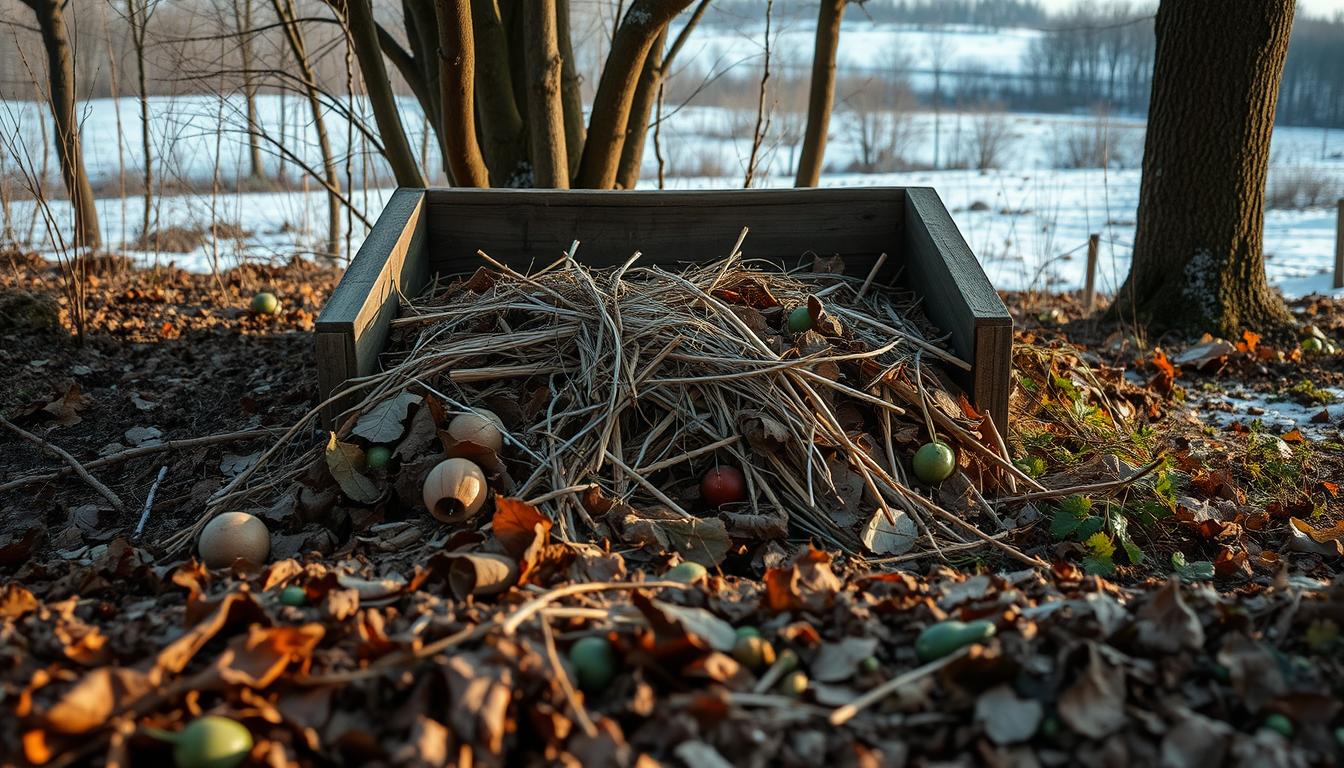
As winter gets closer, it’s key to get your compost pile ready. Composting turns waste into a soil booster, great for gardens and landscaping.
Getting your compost pile ready for winter helps it stay healthy. This means it can keep breaking down waste well. You’ll have rich compost ready for spring.
Key Takeaways
- Understand the importance of composting and its benefits
- Learn why preparing your compost pile for winter is crucial
- Discover the steps to maintain your compost pile’s health during the cold months
- Get tips on how to keep your compost pile active year-round
- Find out how a well-maintained compost pile can improve your garden’s soil quality
The Science Behind Successful Composting
To compost well, you need to understand the science behind it. Composting is not just about throwing away organic waste. It’s about making a place where tiny living things can work together to turn waste into something useful.
Understanding the Decomposition Process
The heart of composting is the decomposition process. Here, tiny creatures like bacteria and fungi work to break down organic stuff into simpler parts. This process makes heat, carbon dioxide, and water vapor. It needs the right amount of oxygen, moisture, and a mix of different materials.
Key factors influencing decomposition include:
- Temperature: The best temperatures are between 130°F and 140°F.
- Moisture: Keep the pile as damp as a wet sponge.
- Oxygen: Turning the pile often makes sure it gets enough air.
The Carbon-to-Nitrogen Ratio Explained
The carbon-to-nitrogen (C:N) ratio is very important for composting. Microorganisms need a mix of carbon-rich (like leaves, straw) and nitrogen-rich (like food scraps, grass clippings) materials. The best ratio is about 25:1 to 30:1.
| Material | Carbon/Nitrogen Content | C:N Ratio |
|---|---|---|
| Dry Leaves | High Carbon | 40:1 to 80:1 |
| Grass Clippings | High Nitrogen | 10:1 to 20:1 |
| Food Scraps | High Nitrogen | 15:1 to 20:1 |
Why Winter Composting Requires Special Attention
Winter composting comes with its own set of challenges. As it gets colder, the composting slows down. If not managed right, it can almost stop. Knowing these challenges is key to preparing a compost pile for winter and keeping it healthy.
Temperature Challenges in Cold Weather
Cold weather affects how organic matter breaks down. The tiny organisms that do the work are less active in the cold. To fight this, mix materials that can heat up the pile. Add more ‘green’ stuff, like kitchen scraps, which are rich in nitrogen.
Microbial Activity During Winter Months
Microbes are vital for composting, breaking down organic stuff. But in winter, the cold slows them down. To keep microbes going, insulate the pile and mix ‘brown’ and ‘green’ materials. ‘Brown’ stuff, like dried leaves, helps microbes grow.
Benefits of Starting a Compost Pile Before Winter
As the weather gets cooler, starting your compost pile early can be a big help. It prepares your garden for spring and helps manage holiday waste. This makes your garden better and keeps your home clean.
Head Start on Spring Gardening
Starting your compost pile in the fall gives your garden a boost. By spring, your compost will be ready to make your soil rich. Gardening expert, Rachel Kennedy, says, “Composting before winter is like giving your garden a jumpstart on the growing season.”
Reducing Household Waste During Holiday Season
The holiday season brings a lot of organic waste. Kitchen scraps and yard trimmings can be turned into compost. This reduces waste and makes your garden better.
Starting a compost pile before winter is good for your garden and the planet. It helps reduce waste and makes your garden healthier in the spring.
Choosing the Ideal Location for Your Winter Compost Pile
Finding the perfect spot for your winter compost pile is key. It helps deal with cold weather and keeps your compost working well. A good spot ensures your compost breaks down organic matter efficiently.
Sun Exposure Considerations
Sunlight is important, even in winter, for your compost pile’s temperature. Choose a spot that gets direct sunlight for part of the day to prevent freezing. But, don’t let it get too dry. “A spot with morning sun is best,” says composting expert Rhonda Sherman. “It offers warmth without the afternoon sun’s intense heat.”
Protection from Excessive Moisture and Snow
Winter brings a lot of moisture and snow, which can soak your compost pile. This slows down decomposition. To fight this, put your compost pile under a roof overhang, a tree canopy, or a tarp. This keeps moisture levels steady, which is important for composting in the winter.
Accessibility During Snowy Conditions
It’s also important to pick a spot that’s easy to get to, even when it’s snowy. Place it near a path you clear or close to a door. Easy access means you’ll keep up with maintenance, which is crucial for winter compost pile maintenance.
By thinking about these points, you can find a great spot for your winter compost pile. It will stay healthy and work well even in the cold months.
Essential Tools and Materials for Winter Composting
To keep your compost pile healthy in winter, you need the right tools and materials. Winter composting takes more effort than in warmer months. But with the right setup, you can keep your compost pile active even in cold weather.
Compost Bins vs. Open Piles for Winter
Choosing between a compost bin and an open pile is key in winter. Compost bins keep the pile warm better because they insulate well. Open piles are harder to insulate and might need extra materials to stay warm.
| Feature | Compost Bins | Open Piles |
|---|---|---|
| Insulation | Better insulation | Requires additional insulation |
| Weather Protection | Protected from harsh weather | Exposed to weather conditions |
| Maintenance | Easier to maintain | More challenging to maintain |
Insulation Materials and Techniques
Keeping your compost pile warm in winter is crucial. You can use straw, hay, or dry leaves to cover it. You can also make a compost blanket with a tarp or plastic sheet. This helps keep the pile warm and dry.
Thermometers and Monitoring Equipment
It’s important to check your compost pile’s temperature. A compost thermometer lets you see the pile’s internal temperature. Monitoring equipment helps spot problems early, so you can fix them and keep composting healthy.
How to Start a Compost Pile Before Winter: Step-by-Step Guide
To start composting successfully, begin your pile before winter. Composting is a year-round activity. It needs careful planning, especially for cold weather composting strategies.
Starting a compost pile before winter is very beneficial. It lets decomposition start early. This gives you a head start for the next growing season.
Preparing the Foundation Layer
The foundation layer is key for airflow and drainage. Start with a 4-6 inch layer of coarse materials like straw or small twigs. This prevents the pile from getting too compacted and ensures oxygen reaches the bottom.
Adding Green and Brown Materials
After the foundation layer, add green and brown materials. Green materials, like kitchen scraps and grass clippings, are high in nitrogen. Brown materials, such as dry leaves and straw, are high in carbon. Aim for a mix of 2/3 brown materials and 1/3 green materials.
| Material Type | Examples | Carbon/Nitrogen Content |
|---|---|---|
| Green Materials | Kitchen scraps, grass clippings | High in Nitrogen |
| Brown Materials | Dry leaves, straw, shredded newspaper | High in Carbon |
Activating Your Compost Pile
To activate your pile, mix the materials well. Add a compost starter or some finished compost. This introduces beneficial microbes and starts decomposition.
Insulating for Cold Weather Protection
Finally, insulate your pile to protect it from cold. Use straw or shredded newspaper on top, or cover it with a tarp. This keeps the heat in and prevents freezing.
By following these steps, you can start a compost pile before winter. You’ll keep composting healthy through the cold weather, using effective cold weather composting strategies.
Best Materials to Include in Your Winter Compost
Choosing the right materials is key for winter composting. You need items that will heat up and help microbes work. This mix keeps your compost pile healthy, even when it’s cold.
Kitchen Scraps That Work Well in Cold Weather
Kitchen scraps are great for winter compost. Vegetable peels, fruit rinds, and tea bags are full of nutrients. They help make the pile warm. But, skip meat, dairy, and oily foods as they attract pests and smell bad.
Go for coffee grounds, eggshells, and bread instead. They’re perfect for winter composting.
Yard Waste and Fall Leaves as Compost Gold
Yard waste and fall leaves are gold for your compost. They’re full of carbon and energy for microbes. Shredding leaves helps them break down faster.
Mixing yard waste with kitchen scraps makes a great compost mix. It helps everything decompose well.
Hot Materials to Boost Winter Decomposition
To keep your compost pile active in winter, add “hot” materials. These are high in nitrogen. Manure from herbivores, blood meal, or fish emulsion are good choices. They make the pile warm, helping microbes work even when it’s cold.
Materials to Avoid During Winter Composting
Not all materials are good for winter composting. Knowing what not to add can help your compost succeed. It’s key to add the right stuff and leave out the wrong, especially in winter.
Problematic Food Scraps in Cold Conditions
Certain food scraps are bad for winter compost piles. Meat, dairy, and oily foods attract pests and smell bad, worse in cold weather. They also cause anaerobic conditions, slowing down decomposition. It’s best to skip these in winter.
On the other hand, vegetable peels and fruit rinds are safer. But, it’s important to mix them with other materials to keep the compost healthy.
Items That Slow Decomposition in Low Temperatures
Some materials slow down decomposition in cold weather. Large branches and thick woody materials decompose slowly. They can block airflow and moisture. Cutting them into smaller pieces helps.
Also, be careful with weed seeds and diseased plant material. They can be composted but need careful handling. This ensures they don’t survive or spread disease.
Being mindful of what you add to your compost pile in winter helps. This way, you get nutrient-rich soil for your garden in spring. It follows the best practices for winter composting.
Maintaining Your Compost Pile Throughout Winter
To keep your compost pile going strong in winter, you need to know how cold weather affects it. You’ll have to change how you take care of it to keep it working well.
Optimal Turning Schedule for Cold Weather
Turning your compost pile is still important, even when it’s cold. But you don’t need to do it as often. Try to turn it every 4-6 weeks in winter. This helps keep air flowing without losing too much heat.
Moisture Management During Freezing Temperatures
Managing moisture is key in winter. Too much can cause problems, while too little slows things down. Check the compost’s moisture by squeezing it. It should feel like a damp sponge.
Adding New Materials in Winter Conditions
It’s usually best to wait until warmer weather to add new materials. But some things can help in winter. Try adding straw or shredded newspaper. They help soak up extra moisture and improve air flow.
Using Compost Accelerators in Winter
Compost accelerators are great for winter. They have special microbes that speed up decomposition, even when it’s cold. Using them can really help your compost pile.
| Winter Composting Tips | Benefits |
|---|---|
| Regular Turning | Maintains Aeration |
| Moisture Control | Prevents Anaerobic Conditions |
| Adding Bulking Agents | Improves Aeration and Absorbs Excess Moisture |
By following these tips and adjusting your composting routine for winter, you can keep your pile healthy. It will continue to break down organic matter well, even in cold weather.
Advanced Winter Composting Techniques
For those committed to composting year-round, advanced winter techniques can make all the difference. As temperatures drop, keeping a compost pile healthy needs more than basics. It requires a strategic approach to keep decomposition active.
Hot Composting Methods for Cold Climates
Hot composting involves high temperatures in the compost pile to speed up decomposition. Even in cold climates, this method works by using insulation and ensuring the pile is large. Key materials include kitchen scraps, manure, and other nitrogen-rich substances.
Trench Composting Under Snow
Trench composting buries compost materials in trenches, effective under snow. It protects materials from extreme cold and allows decomposition to continue underground. Trenches should be deep to prevent freezing temperatures from affecting decomposition.
Using Compost Heat to Extend Growing Season
Compost piles generate significant heat as materials decompose. This heat can extend the growing season. For example, placing a compost pile near a cold frame or using compost heat to warm soil can provide plants with a longer growing period.
| Technique | Description | Benefits |
|---|---|---|
| Hot Composting | Maintaining high temperatures to accelerate decomposition | Faster decomposition, pathogen kill |
| Trench Composting | Burying compost materials in trenches | Protection from extreme cold, continued decomposition |
| Compost Heat Utilization | Using compost heat to warm soil or cold frames | Extended growing season, improved soil health |
By using these advanced winter composting techniques, gardeners can keep a compost pile healthy even in the coldest months. This ensures a rich soil amendment for the spring gardening season.
Troubleshooting Common Winter Composting Problems
Winter composting comes with its own set of challenges. As the weather gets colder, compost piles can slow down. We’ll look at common winter composting problems and offer solutions to keep your pile working well.
Dealing with a Frozen Compost Pile
A frozen compost pile can slow down decomposition. To unfreeze it, try insulating it with straw or leaves to keep it warm. You can also turn the pile to add oxygen and speed up thawing. For future prevention, use an insulated compost bin or place it in a sheltered spot.
Addressing Odor Issues in Winter
Odors from compost piles can be more noticeable in winter. To reduce odors, make sure your pile has the right mix of green and brown materials. Adding brown materials on top can also help absorb smells. If odors still bother you, try aerating the pile to improve air flow.
Managing Pests in Cold Weather
Even in cold weather, pests can still be a problem. To keep pests away, avoid adding meat, dairy, or oily foods to your compost. Instead, focus on composting vegetable scraps and yard waste.
Reviving a Stalled Winter Compost Pile
If your compost pile seems to have stopped working, there are steps to revive it. First, check the carbon-to-nitrogen ratio and adjust if needed. Adding high-nitrogen materials like manure or blood meal can help. Also, turn the pile and make sure it has enough moisture to get decomposition going again.
By tackling these common issues and using the right strategies, you can keep your compost pile active all winter. For more tips for winter composting success, regularly check your pile’s temperature and adjust as needed. With these cold weather composting strategies, you’ll achieve composting success.
Conclusion: Setting Yourself Up for Composting Success
Successful winter composting needs careful planning and upkeep. By learning about composting science and following best practices, you can make rich soil for your garden.
Remember, picking the right spot, using the right tools, and keeping your compost pile in check are key. By following these tips and choosing the right materials, you’ll cut down on waste and make something valuable for your garden.
As you continue with winter composting, keep an eye on your pile’s temperature and moisture. With a bit of practice and patience, you’ll see the benefits of composting all year.
