

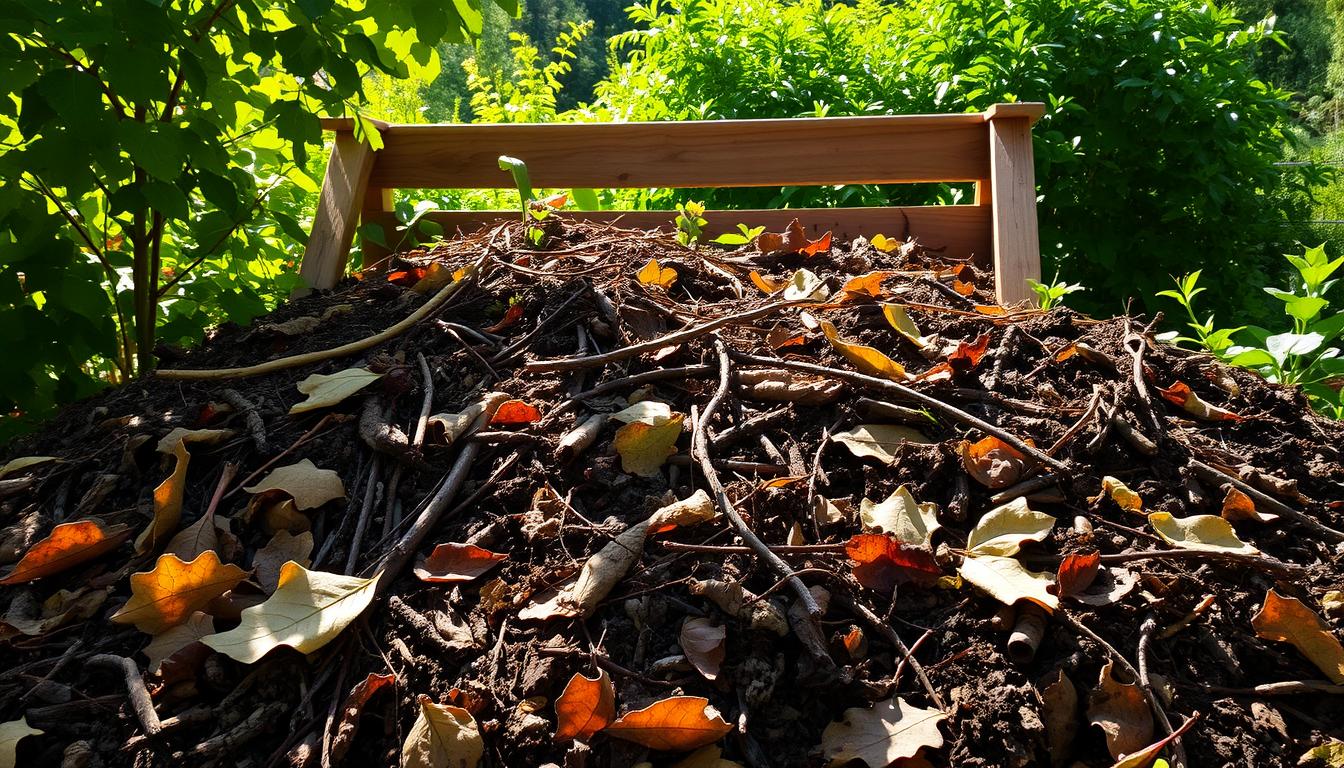
As the seasons change and fall garden debris piles up, it’s key to think about composting. Composting not only cuts down on landfill waste but also makes the soil better. This boosts sustainable gardening practices.
By choosing eco-friendly garden maintenance, you can make your soil healthier. This also brings more life to your garden and makes it stronger. Composting is a great way to help your garden and the planet.
Key Takeaways
- Composting reduces waste and supports sustainable gardening.
- Eco-friendly garden maintenance improves soil health.
- Composting promotes biodiversity and a resilient garden ecosystem.
- Adopting composting practices contributes to a healthier environment.
- Simple composting methods can be highly effective.
The Gold Mine in Your Garden: Benefits of Fall Composting
Fall composting is more than just recycling garden waste. It’s about making your gardening more sustainable. You’ll see how this simple process can greatly benefit your garden and the environment.
Environmental Impact: Reducing Landfill Waste
One big advantage of fall composting is less waste in landfills. By composting, you keep organic materials out of landfills. This reduces garden waste through composting and cuts down on methane, a harmful greenhouse gas.
Creating Free, Nutrient-Rich Soil for Next Season
Composting makes your soil better with nutrients. This means you’ll have nutrient-rich soil for next year’s plants. You’ll need less synthetic fertilizers, making your garden healthier.
Building Soil Health Through Natural Cycles
By composting, you support natural soil cycles. This helps create a healthy underground ecosystem. It’s full of good microbes that help plants grow well.
Long-term Benefits for Garden Productivity
- Increased soil fertility and structure
- Improved water retention and aeration
- Enhanced nutrient cycling
Reducing Your Carbon Footprint
Composting is a sustainable gardening practice. It’s good for your garden and helps reduce your carbon footprint. By cutting down on waste and synthetic fertilizers, you’re gardening in a greener way.
Fall Composting Inventory: What Goes In and What Stays Out
The fall season brings a lot of garden debris. It’s important to know what to compost to make good soil for next year. When cleaning your garden, know what materials are good for compost and what to leave out.
Green Materials: Nitrogen-Rich Fall Garden Waste
Green materials are full of nitrogen and are key for a good compost pile. They include:
- Vegetable Plants and Spent Annuals: These add nitrogen and speed up composting.
- Grass Clippings and Green Prunings: Rich in nitrogen, they balance out the carbon-rich brown materials.
Brown Materials: Carbon Sources from Autumn
Brown materials provide carbon, which is needed for composting. Examples include:
- Fallen Leaves and Pine Needles: Great sources of carbon, balancing out the nitrogen-rich green materials.
- Straw and Dried Plant Material: These brown materials help the composting process.
Materials to Avoid in Your Fall Compost
Not everything should go into your compost pile. Avoid adding:
- Diseased Plants and Invasive Weeds: They can contaminate your compost and harm your garden.
- Treated Wood and Non-Organic Materials: They can introduce toxins, making your compost harmful to plants.
By choosing what goes into your compost pile carefully, you can make a nutrient-rich soil amendment. This will help your garden for many seasons.
Setting Up for Success: Tools and Systems for Fall Composting
To make the most of your fall garden waste, you need the right tools and systems. A good composting plan is key to turning waste into something valuable.
Choosing the Right Compost System for Your Space
Choosing the right composting system is important. It depends on how much space you have, how much waste you have, and what you like.
Enclosed Bins vs. Open Piles
Enclosed bins keep things neat and pest-free. Open piles are easier to turn and aerate. Enclosed bins are great for small spaces and controlling smells. Open piles work well for bigger amounts of waste.
Multi-Bin Systems for Continuous Composting
A multi-bin system lets you compost continuously. It’s good for keeping the composting process going all year. This is especially helpful for those who compost a lot.
| Compost System | Space Requirement | Odor Control | Maintenance |
|---|---|---|---|
| Enclosed Bins | Low to Medium | High | Regular Turning |
| Open Piles | Medium to High | Low | Frequent Turning |
| Multi-Bin Systems | High | Variable | Continuous Monitoring |
Essential Tools That Make Composting Easier
The right tools make composting easier. You’ll need shredders, chippers, turning tools, and moisture meters.
Shredders and Chippers for Faster Decomposition
Shredders and chippers break down waste quickly. They make the waste smaller, which helps microbes work faster.
Turning Tools and Moisture Meters
Turning tools like pitchforks help mix the compost. Moisture meters keep the compost just right for microbes.
Location Considerations for Winter Accessibility
Think about where you’ll put your compost system for winter. Make sure it’s easy to get to, even when it’s snowy or icy. This helps you keep up with maintenance.
How to Compost Garden Debris After Fall Harvest
The fall season brings a lot of garden waste. But, with the right methods, you can turn it into something valuable. Composting garden debris after the fall harvest is key to a healthy garden. It reduces waste, makes soil rich in nutrients, and helps plants grow well.
Preparing Your Garden Waste for Optimal Decomposition
Before you start composting, prepare your garden waste. This means cutting and shredding it, and taking out things that can’t be composted.
Cutting and Shredding Techniques
Cutting and shredding your waste makes it easier for microorganisms to break it down. Use a garden shredder or chipper for branches and stems. For leaves and softer stuff, just chop them with garden shears or a lawn mower.
Removing Non-Compostable Elements
Not all garden debris can be composted. Take out plastic labels, weeds with seeds, and diseased plants. This keeps your compost healthy and effective.
Building Your Compost Pile: The Layer Cake Method
The layer cake method is a simple way to build your compost pile. It involves creating layers of green and brown materials.
Starting with the Right Foundation
Start with a 4-6 inch layer of coarse brown materials like straw or small twigs. This helps with airflow and drainage.
Alternating Green and Brown Layers
Alternate between green (nitrogen-rich) and brown (carbon-rich) layers. Green materials are kitchen scraps, grass clippings, and fresh leaves. Brown materials are dried leaves, straw, and shredded newspaper. Aim for 2/3 brown and 1/3 green.
Activating Your Compost with Accelerators
Compost accelerators speed up decomposition. You can use commercial products or make your own DIY options.
Commercial Activators vs. DIY Options
Commercial compost activators are available and contain microorganisms. Or, you can make your own using manure, comfrey leaves, or finished compost.
When and How to Add Activators
Add compost accelerators when building your pile or during decomposition. Follow the instructions for commercial products, or mix your DIY activator into the pile.
Leaf Management: Turning Fall’s Abundance into Garden Gold
Fallen leaves are more than just a seasonal cleanup task; they are a goldmine for sustainable gardening practices. By effectively managing and composting leaves, gardeners can create nutrient-rich soil for future seasons.
Collection and Storage Strategies for Large Volumes
Efficient leaf management begins with effective collection and storage. Leaves can be gathered using various methods, including raking and vacuuming.
Efficient Gathering Methods
Using a leaf vacuum or a lawn mower with a bag attachment can significantly speed up the collection process. For smaller areas, simple raking can be effective.
Creating Leaf Mold Storage Systems
Leaves can be stored in designated areas, such as wire mesh enclosures or compost bins. It’s essential to keep the leaves moist and aerated to facilitate decomposition.
Shredding vs. Whole Leaves: What Works Best
Shredding leaves before composting can accelerate the decomposition process. However, whole leaves can also be effective, especially when creating leaf mold.
| Method | Decomposition Rate | Nutrient Content |
|---|---|---|
| Shredded Leaves | Fast | High |
| Whole Leaves | Slow | Medium |
Specialized Leaf Composting Techniques
Leaf mold production is a valuable technique for creating a nutrient-rich soil amendment. Leaves can also be used as winter garden mulch, providing insulation and suppressing weeds.
Leaf Mold Production Timeline
Leaf mold typically takes 1-2 years to mature, depending on factors like moisture and aeration. Regular turning can speed up the process.
Using Leaves as Winter Garden Mulch
Applying a layer of leaves to garden beds can protect soil from erosion and extreme temperatures. This mulch will also add organic matter as it breaks down.
By adopting these strategies, gardeners can turn fall’s abundance into a valuable resource, enhancing soil health and supporting sustainable gardening practices.
Tackling Tough Stuff: Woody Stems and Fibrous Materials
As fall ends, gardeners face a lot of woody debris and fibrous materials. These can be composted with the right steps. It’s a key way to cut down on waste and make soil rich for next year’s plants.
Processing Methods for Different Types of Woody Debris
Woody debris needs different ways to be processed. For big branches, chipping or shredding is key. It makes them break down faster.
Chipping and Shredding Equipment Options
There are many tools for chipping and shredding. You can choose from manual tools like loppers and pruning saws. Or, you might prefer electric or gas-powered shredders.
- Manual Tools: Great for small amounts, they’re cheap and good for the planet.
- Electric Shredders: Good for medium gardens, they’re quieter and cleaner than gas models.
- Gas-Powered Shredders: Ideal for lots of debris, they’re powerful but need more upkeep.
Hand-Processing Techniques for Small Amounts
For a little debris, you can use your hands. Cut branches into smaller bits or use a machete to chop them.
Creating Separate Decomposition Areas for Slow Materials
Some materials, like big branches, take longer to break down. Having a special area for them helps the process.
Hugelkultur: An Alternative for Larger Woody Waste
Hugelkultur is a way to bury wood debris under soil and other organic stuff. It breaks down the wood and also keeps the soil moist, saving on water.
Building a Basic Hugelkultur Bed
To make a Hugelkultur bed, start with big branches, then smaller twigs and organic stuff, and top with soil.
| Layer | Materials | Benefits |
|---|---|---|
| Base Layer | Larger Woody Branches | Improves drainage and aeration |
| Middle Layer | Smaller Twigs and Organic Materials | Provides nutrients and carbon-rich matter |
| Top Layer | Soil and Compost | Supports plant growth and retains moisture |
Benefits for Garden Drainage and Fertility
Hugelkultur beds help with drainage by letting water flow through. They also make the soil richer as the wood breaks down.
By using these methods, gardeners can turn waste into valuable resources for their gardens.
Winter Compost Management: Keeping Decomposition Active
Keeping your compost pile active in winter is key for sustainable gardening practices. As it gets colder, you need to change how you compost to keep things moving.
Insulating Your Compost for Continued Activity
Insulation is vital to keep the compost pile warm. You can use different materials and methods to do this.
Materials for Covering and Insulating
- Straw or hay bales
- Old carpets or tarps
- Thick layers of leaves
These materials help keep the heat from decomposition inside the pile.
Creating Heat-Retaining Structures
Think about making a compost bin that keeps heat in. Or, wrap your current bin with insulating stuff.
Moisture Management During Wet and Freezing Months
It’s important to manage moisture in winter. Too much water can make the pile soggy and icy.
Preventing Waterlogging and Ice Formation
Make sure your compost pile is covered to keep out too much moisture. If it gets too wet, add some dry stuff to fix it.
When and How to Add Water in Winter
If your compost is too dry, you can add a little water. But do it carefully to avoid making ice.
Winter Turning Schedule: Less is More
Turning your compost too much in winter can mess up the process. It’s better to turn it less often during this time.
- Check the pile’s temperature and moisture before turning.
- Turn the pile only when necessary to maintain aeration.
By following these tips, you can keep your compost pile active all winter. This means you’ll have a great soil amendment for your garden in spring.
Troubleshooting Your Fall Compost Pile
Keeping your fall compost pile healthy is key. You’ll face challenges when composting garden waste. It’s important to solve common problems.
Addressing Slow Decomposition Issues
Slow decomposition is a big issue in fall composting. Finding out why it happens is crucial.
Identifying Causes of Stalled Composting
Several things can slow down decomposition. These include:
- Insufficient carbon-to-nitrogen ratio
- Inadequate moisture
- Lack of oxygen
Quick Fixes for Common Problems
To fix slow decomposition, try these:
- Adjust the carbon-to-nitrogen ratio by adding more brown materials
- Ensure adequate moisture by regularly checking the pile
- Turn the pile to introduce oxygen
Managing Unwanted Visitors: Pests and Odors
Pests and odors can be a problem. Understanding why they happen is key.
Preventing Animal Intrusions
To keep animals out, consider these tips:
- Use a secure compost bin
- Avoid adding meat or dairy products
- Keep the area around the compost bin clean
Eliminating Bad Smells
To get rid of odors, make sure your compost is balanced. It needs enough carbon materials.
Balancing an Imbalanced Pile
An unbalanced compost pile can cause problems. Knowing the signs of imbalance is important.
Signs of Too Much Nitrogen or Carbon
| Signs | Cause |
|---|---|
| Ammonia smell | Too much nitrogen |
| Slow decomposition | Too much carbon |
Corrective Actions for Rebalancing
To rebalance your compost, adjust the carbon-to-nitrogen ratio. Add more green or brown materials as needed.
By following these tips, you can keep your compost pile healthy. This reduces garden waste and makes the most of your composting efforts.
“Composting is a natural process that turns organic materials into a valuable resource for your garden.”
Conclusion: From Fall Cleanup to Spring Garden Preparation
As fall ends, composting garden debris is key to getting your garden ready for spring. It’s a way to reduce waste and make your soil rich in nutrients. Composting is good for the environment and helps your garden grow strong.
Learning to compost garden debris is a skill that makes your garden healthier. It keeps your garden full of nutrients and life all year. This way of gardening is good for the planet and helps your garden stay healthy for years to come.
By using the composting tips from this article, you’ll have a green and lively garden. As you start the next growing season, you’ll see the good your composting has done. Your garden will be a beautiful place, showing the benefits of caring for the earth.
