

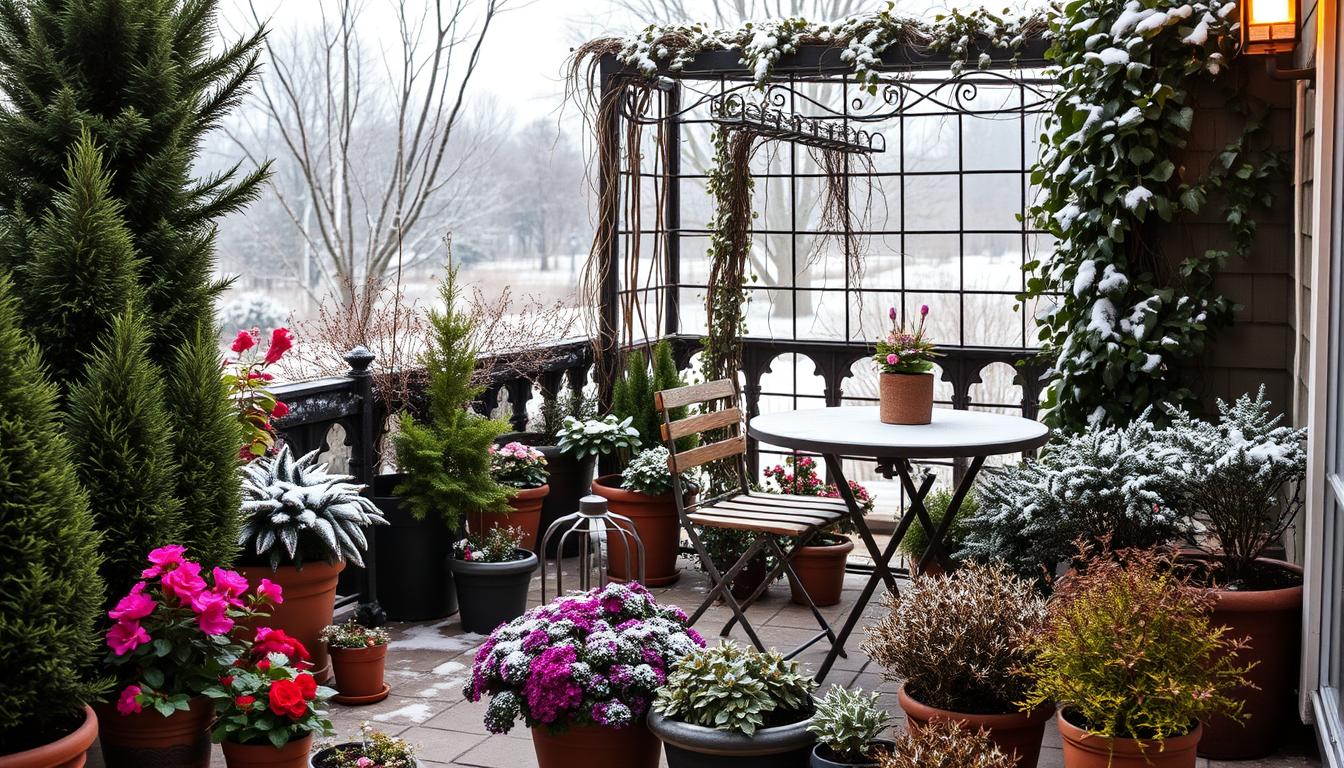
When it gets colder, we often think our outdoor areas will be dull. But, with a bit of creativity, you can make your patio lively, even in winter.
Winter container gardening lets you bring color and texture outside. By picking the right plants and containers, you can make your patio welcoming. It will be a cozy spot, even on the coldest days.
Key Takeaways
- Choose the right plants for winter container gardening
- Select containers that can withstand cold temperatures
- Use a mix of textures and colors to add visual interest
- Consider using evergreen plants for year-round appeal
- Add some decorative elements to enhance the ambiance
The Benefits of Winter Container Gardening
Winter patio container gardening brings many benefits to your outdoor space. It keeps your patio looking good all winter. You also get mental health perks and a beautiful view.
Year-Round Greenery and Visual Interest
One big plus is keeping your patio green all year. Cold-hardy plants like evergreen shrubs and dwarf conifers add color and texture. They look great when everything else is bare and snowy.
Mental Health Benefits During Cold Months
Gardening in winter is good for your mind. It helps lower stress and boosts your mood. Being outside and caring for plants is a natural way to feel better.
Extended Growing Season for Cold-Hardy Plants
Winter gardening also means you can grow plants longer. You can have winter-blooming flowers and hardy herbs. This makes you feel accomplished even when it’s cold.
| Benefits | Description |
|---|---|
| Year-Round Greenery | Maintains visual interest with cold-hardy plants |
| Mental Health Benefits | Reduces stress and improves mood |
| Extended Growing Season | Allows cold-hardy plants to thrive |
Planning Your Winter Balcony Garden
To make the most of your winter balcony garden, start by checking your patio’s microclimates. Knowing the different conditions on your balcony is key. It helps you pick the right plants and containers.
Assessing Your Patio Space and Microclimates
Look at the sunlight, wind, and temperature changes on your balcony. Find areas that get full sun, partial shade, or full shade. This will help you choose the right plants. Use a microclimate map to track these conditions.
- Note the average sunlight hours
- Observe wind patterns
- Record temperature variations
Understanding Your USDA Hardiness Zone
Knowing your USDA Hardiness Zone is crucial for picking plants that will do well in your garden. Check the USDA Plant Hardiness Zone Map to find your zone.
Setting Realistic Winter Gardening Goals
Set goals for your winter balcony garden, like growing herbs or making a pretty arrangement. Choose low-maintenance plants. Also, think about using patio planters for winter that are made for cold weather.
Selecting the Right Containers for Winter
Choosing the right containers is key for a successful winter garden. The wrong ones can crack, leak, or break down in cold weather. This puts your plants at risk.
Weather-Resistant Materials for Cold Climates
For winter gardening, pick containers made from weather-resistant materials. Some top choices are:
- Durable plastic containers that won’t crack in freezing temperatures
- Fiberglass containers that provide good insulation
- Terracotta pots with a protective glaze to prevent freezing damage
- Metal containers made from rust-resistant materials like galvanized steel
These materials help keep your plants safe from harsh winter weather.
Size and Insulation Considerations
The size of your containers matters a lot in winter. Bigger containers hold more heat and protect roots better. Choose containers that are at least 12-18 inches deep for root protection.
You can also improve insulation by:
- Wrapping containers with bubble wrap or foam insulation
- Using containers with built-in insulation
- Grouping containers together to create a microclimate that protects the roots
Drainage Solutions for Freezing Temperatures
Good drainage is crucial to avoid waterlogged soil in freezing temperatures. To ensure proper drainage:
- Check that your containers have adequate drainage holes
- Add a layer of small rocks or broken pottery at the bottom of the container
- Use a well-draining potting mix specifically designed for winter container gardening
These drainage solutions help prevent root rot and other waterlogged soil issues.
Soil and Potting Mix Essentials for Winter
As winter comes, the soil and potting mix in your container garden are key. They protect your plants from cold weather. The right mix keeps roots warm, stops waterlogging, and helps your garden thrive.
Winter-Specific Soil Requirements
Winter soil holds moisture but drains excess water to avoid root rot. Look for mixes with peat moss or coconut coir. These keep moisture in without getting soggy.
Adding Proper Drainage Materials
To stop water buildup in your pots, add the right drainage materials. Perlite or vermiculite in your mix improves drainage and air. This keeps roots healthy.
Mulching Techniques for Root Insulation
Mulching keeps roots warm in cold weather. Use organic mulch like straw or bark chips around your plants. It keeps soil warm and protects roots. Good mulching techniques are crucial for plant survival in winter.
By focusing on these soil and potting mix essentials, you create a strong base for your winter garden. It stays healthy and bright all winter long.
Container Gardening Ideas for Winter Patio
Learn how to beautify your winter patio with container gardening. It’s a great way to make your outdoor space lively during the cold months.
Evergreen Arrangements with Texture and Form
Evergreen arrangements can make your patio look amazing. Mix plants like holly and boxwood for a cool contrast. Different shapes and sizes add to the beauty.
Winter-Flowering Plant Combinations
Winter-flowering plants can brighten up your patio. Try pairing cyclamen with winter heather for a colorful look. These plants also attract winter pollinators.
Incorporating Decorative Elements
Decorative elements can take your winter garden to the next level. Use pinecones, twigs, and ribbons for a seasonal feel. Add ornaments or fairy lights for a festive vibe.
Colorful Berry-Producing Plants for Winter Interest
Berry-producing plants like winterberry holly or cranberry add color to your containers. They’re not just pretty; they also attract birds and wildlife.
When trying these ideas, pick plants right for your area and care for them well. This way, they’ll stay healthy all winter.
“The garden is a love song, a duet between a human being and Mother Nature.” – Allen Lacy
Winter-Hardy Plants for Patio Planters for Winter
Winter-hardy plants are key to a stunning winter patio garden. They bring color and texture even when it’s cold. These tough plants do well in containers, making your outdoor space lively during winter.
Evergreen Shrubs and Dwarf Conifers
Evergreen shrubs and dwarf conifers are great for winter containers. They keep their leaves all year, creating a lush look. Try boxwood or holly for dense, green leaves. Or choose dwarf Alberta spruce for its unique texture.
Cold-Tolerant Perennials and Grasses
Cold-tolerant perennials and grasses add movement and texture to winter planters. Sedum and heuchera have interesting leaves. Blue oat grass stands out with its vertical element.
Winter-Blooming Flowers and Bulbs
Winter-blooming flowers and bulbs bring color to your containers. Cyclamen and winter aconite bloom early, sometimes in late winter. Plant snowdrops or grape hyacinths in fall for a vibrant display later.
Structural Plants with Interesting Bark or Branches
Plants with unique bark or branches, like red osier dogwood or Harry Lauder’s walking stick, add winter interest.
Evergreen Container Plants for Winter Focal Points
Evergreen plants make great focal points in containers. Think about boxwood topiaries or upright rosemary for their shape.
Growing Winter Herbs in Containers
You can grow herbs in containers even when it’s cold. This way, you can always have fresh flavors for your cooking. To do well, pick the right herbs and containers for winter.
Hardy Herbs That Thrive in Cold Weather
Some herbs can handle cold better than others. Hardy herbs like rosemary, thyme, and sage can handle frost and keep growing in winter. Other good choices include:
- Chives
- Parsley
- Mint (though it may die back, it regrows in spring)
Container Requirements for Winter Herbs
For winter herbs in containers, choose containers that can handle freezing. Use containers made from durable materials like terracotta or plastic that keep warm. Make sure they have holes for water to drain to avoid soggy soil.
Harvesting and Using Fresh Winter Herbs
Harvest your winter herbs often to keep them healthy. Pinch off flower buds to help leaves grow. Use your fresh herbs in soups, salads, and more to add taste and nutrition.
Cold Weather Container Gardening Maintenance
Cold weather container gardening needs special care to keep plants healthy. Winter brings new challenges for your container garden. It’s important to care for it well to keep it alive and looking good.
Proper Watering Techniques
Watering your garden in freezing weather is tricky. Check the soil moisture by feeling it with your finger. If it’s dry, it’s time to water. But don’t water if it’s already moist to avoid root rot.
Use cold water to protect the roots from shock.
Winter Fertilizing Guidelines
Fertilizing in winter should be done carefully. Use a balanced, water-soluble fertilizer but at half the usual strength. This gives plants the nutrients they need without harming them.
| Plant Type | Fertilizer Frequency | Watering Schedule |
|---|---|---|
| Evergreen Shrubs | Once every 6 weeks | When soil is dry |
| Winter-Blooming Flowers | Once every 4 weeks | When soil is dry |
Pruning and Deadheading
Pruning and deadheading are key in winter. Remove dead or damaged branches to stop disease and help growth. For flowers, deadhead spent blooms to keep them flowering.
By following these tips, your container garden will stay healthy and beautiful all winter.
Protecting Winter Flower Pots from Extreme Cold
As winter gets closer, it’s key to keep your flower pots safe from cold. Freezing weather can harm both the plants and the pots. We’ll look at ways to keep your winter flower pots safe from harsh winter weather.
Insulation Methods for Container Walls
One good way to protect your pots is to insulate the walls. You can use bubble wrap, foam sheets, or burlap to wrap them. This layer keeps the soil warm, which helps prevent root damage.
Using Covers, Cloches, and Frost Cloth
Covers, cloches, and frost cloth are great for protecting your pots. They can be placed over the plants to keep them safe from frost and wind. For example, a cloche can cover one plant, while a frost cloth can cover more pots or areas.
Where you place your pots also matters. Putting them in a sheltered spot, like against a south wall or under a patio, helps protect them from wind and frost.
Emergency Protection During Severe Weather Events
When it gets very cold, you might need to take extra steps. Moving pots to a safer place or using more insulation can help. If you can’t move them, adding more covers can offer extra protection.
By using these methods, you can keep your winter flower pots safe from the cold. This way, they’ll stay healthy and look great all winter.
“The key to successful winter container gardening is preparation and protection. By shielding your plants from extreme cold, you can enjoy a thriving garden even in the harshest of winters.”
Troubleshooting Common Winter Container Garden Problems
Winter container gardening faces unique challenges, like frozen soil and pests. These issues can pop up, even with careful planning. They need quick fixes to keep your garden healthy and looking good.
Dealing with Frozen Soil and Root Damage
Frozen soil can harm plant roots in containers. To prevent this, choose insulated containers. Wrap them with bubble wrap or burlap for extra protection. Also, moving them to a warmer spot can help avoid root damage.
Preventing and Treating Winter Diseases
Even in cold weather, container gardens can get diseases. To stop diseases, make sure plants have good air flow. Avoid watering from above to prevent leaf splash and fungal growth. If you spot disease, cut off sick leaves or stems. Use a fungicide if needed.
Managing Pests in Cold Weather Containers
Pests can stick around in winter, damaging your plants. Check your plants often for pests. Use organic or chemical treatments as needed. Keeping containers clean can also help fight pests.
| Problem | Solution |
|---|---|
| Frozen Soil | Insulate containers, move to sheltered location |
| Winter Diseases | Improve air circulation, avoid overhead watering |
| Pests | Regular inspection, use organic or chemical controls |
Conclusion: Enjoying Your Winter Patio Garden
Winter doesn’t mean your patio has to be dull. With the right ideas, it can stay vibrant and welcoming. Follow the tips shared to make your patio a cozy winter retreat.
Choosing the right containers and plants is key. Also, keep your garden safe from harsh weather. Add evergreen plants, winter flowers, and decorations to make it lively.
With some effort, your patio can be a peaceful oasis in winter. Be creative with your garden and enjoy the beauty it brings. Relax and take pleasure in your winter patio garden.
