

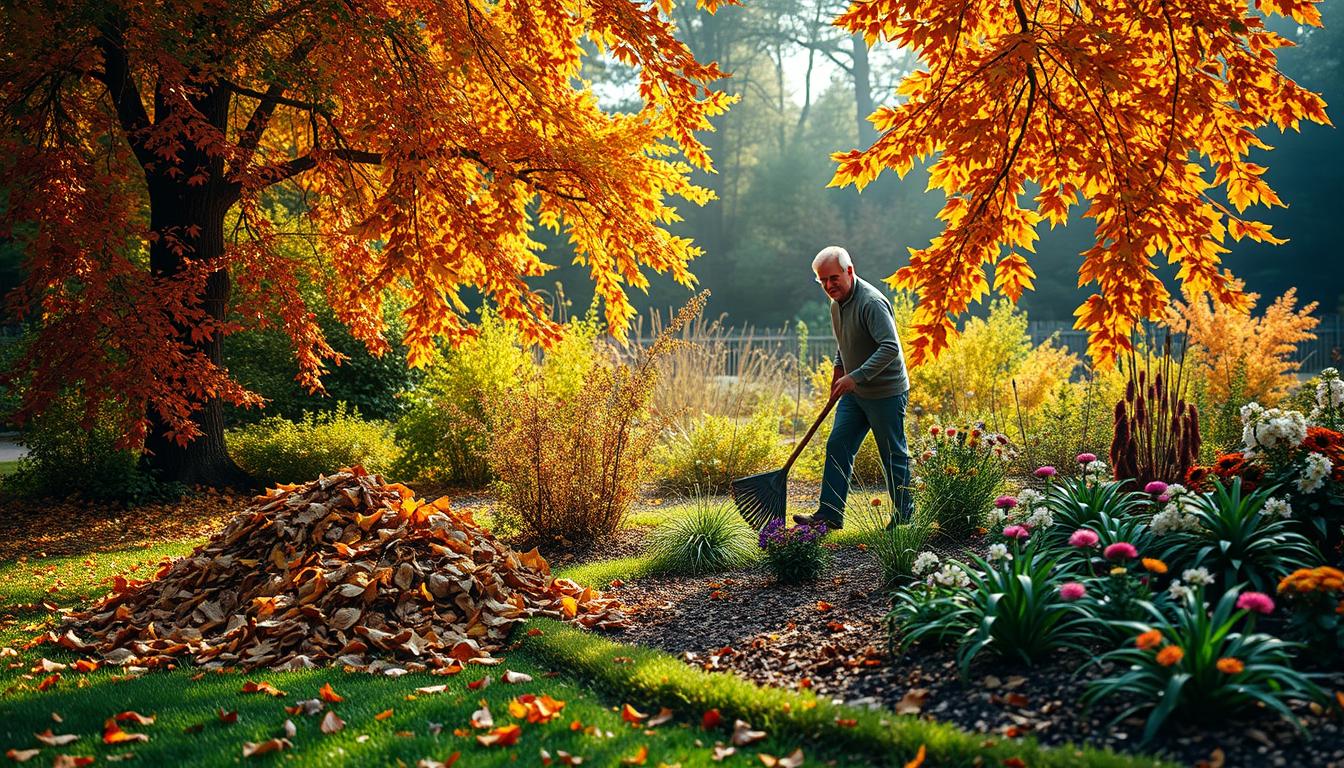
As the autumn colors fade, it’s time to get your garden ready for winter. A well-kept garden looks great and helps it survive the cold weather.
Changing your garden from fall to winter needs some key steps. These tasks help keep your garden healthy and ready for spring. They also protect your plants and prevent damage.
Key Takeaways
- Prepare your garden for winter by removing dead plants and debris.
- Protect your plants from harsh winter weather.
- Maintain your garden’s health during the cold months.
- Ensure a thriving garden in the spring.
- Make the most of your outdoor space year-round.
Seasonal Garden Cleanup Tasks: Fall to Winter Transition
As leaves fall and the weather gets cooler, gardeners need to focus on end-of-season yard cleanup. This time is not just for tidying up. It’s about getting your garden ready for winter and spring.
Benefits of Proper End-of-Season Maintenance
Proper end-of-season maintenance has many benefits. It reduces disease and pest risks, improves soil health, and gives you a spring start. Cleaning your garden now stops debris from attracting pests and diseases, making it healthier in spring.
A well-maintained garden also looks better in winter. It keeps your garden clean and inviting, even when it’s cold.
“A garden is a love song, a duet between a human being and Mother Nature.” – Jeff Cox
Consequences of Neglecting Fall Cleanup
Ignoring fall cleanup can cause many problems. It increases disease and pest risks, attracts wildlife, and makes spring cleanup harder. Unchecked debris also leads to weeds and soil erosion.
| Consequence | Impact |
|---|---|
| Disease and Pests | Increased risk of garden diseases and pest infestations |
| Wildlife Damage | Damage to plants and structures from wildlife seeking shelter |
| Spring Cleanup | Increased labor for spring cleanup due to accumulated debris |
Setting Goals for Winter Garden Preparation
Setting clear goals for winter garden prep helps guide your cleanup. Think about what you want to achieve, like protecting plants, improving soil, or making spring cleanup easier.
By focusing on these goals, you can tailor your cleanup to meet your garden’s needs. This ensures it stays healthy and thrives through winter and into spring.
Tools and Materials You’ll Need for Fall Garden Cleanup
To get your garden ready for winter, you’ll need the right tools and materials. A well-prepared gardener can make cleanup easier. This ensures your garden stays healthy all winter.
Essential Garden Tools for Seasonal Maintenance
Choosing the right garden tools is key for a good fall cleanup. You’ll need a strong rake for leaves, pruning shears for cutting back plants, and a garden fork for soil. A wheelbarrow or garden cart helps move debris and supplies.
Protective Gear and Safety Equipment
Cleanup can be dangerous, so wear protective gear. Gloves protect your hands, safety glasses your eyes, and sturdy boots your feet. Wear a dust mask to avoid breathing in dust.
Eco-Friendly Cleanup Supplies
For a greener cleanup, use eco-friendly supplies. Biodegradable bags, compost bins, and natural mulch are good choices. They help reduce waste and make your garden healthier.
Timing Your Fall to Winter Garden Cleanup
As fall goes on, it’s key to clean your garden right for winter. The right time depends on where you live and the weather there.
Regional Timing Considerations Across the US
The US has many climates. So, it’s important to think about these differences when cleaning your garden.
Northern States Timeline
In northern states, the first frost comes early. This means you should start cleaning in late October or early November. Places like New York or Michigan follow this rule.
Southern States Timeline
Southern states, like Florida or California, might not get frost at all. This lets gardeners clean up later, into December or January.
Weather Cues That Signal It’s Time to Start
Watching the weather helps you know when to clean. Look for cooler temperatures, the first frost, or a lot of rain.
“The best time to plant a tree was 20 years ago. The second best time is now.” – Chinese Proverb
This saying shows how important timing is in gardening. Getting your cleanup right can really help your garden.
Creating a Week-by-Week Cleanup Schedule
Breaking your cleanup into weekly tasks makes it easier. Here’s a simple plan:
| Week | Cleanup Tasks |
|---|---|
| Week 1 | Clear fallen leaves from garden beds |
| Week 2 | Prune deciduous trees and shrubs |
| Week 3 | Remove annual plants and compost |
By doing tasks a little at a time, you can get your garden ready for winter.
Clearing and Managing Fallen Leaves
Fallen leaves in autumn are both a blessing and a challenge for gardeners. They signal the changing seasons but need careful management to keep the garden healthy. Good leaf management keeps your garden tidy and benefits the soil and wildlife.
Effective Leaf Collection Methods
Clearing leaves can be tough, but the right tools make it easier. Use leaf rakes, blowers, or lawn mowers with bag attachments to gather leaves. Raking leaves is traditional and good exercise, while blowers are quicker for big areas. Shredding leaves with a lawn mower is eco-friendly and can be left on the lawn or composted.
Composting Fallen Leaves for Spring Garden Benefits
Composting leaves is great for making nutrient-rich soil for spring. Leaves are rich in carbon, perfect for compost. They break down into valuable nutrients for plants. Mix leaves with kitchen scraps and turn the compost pile often for aeration.
“Compost is the lifeblood of our garden, and fallen leaves are a key ingredient in our compost mix.” – Gardening Expert
Strategic Leaf Management for Wildlife Habitat
Leaves are good for the soil and wildlife too. Leave some areas leaf-covered to create a haven for beneficial insects and small animals.
Beneficial Insects That Overwinter in Leaf Litter
Many beneficial insects, like ladybugs and lacewings, overwinter in leaf litter. Letting some leaves stay helps these insects survive the winter and bloom in spring.
Creating Leaf Mold for Garden Soil
Leaf mold, made from decomposing leaves, is a treasure for gardeners. It improves soil structure, holds water better, and supports microbes. Just collect leaves and let them decompose over time.
By managing fallen leaves well, gardeners can keep their garden tidy and healthy. Whether composting, making leaf mold, or helping wildlife, your efforts will reward you in spring.
Preparing Garden Beds for Winter
The fall to winter transition is a great time to prepare your garden beds. This ensures a strong start in the spring. As the growing season ends, your garden beds need care to withstand winter and prepare for spring.
Removing Annual Plants and Vegetable Garden Cleanup
Begin by removing annual plants that have stopped growing. This makes your garden look neat and keeps diseases and pests away. For vegetable gardens, take out any leftover crops and get rid of diseased or infested plants.
- Pull out annuals and add them to the compost pile if they’re disease-free.
- Clear vegetable debris to prevent pest and disease buildup.
- Consider rotating your vegetable garden to avoid depleting the soil of specific nutrients.
Soil Amendment and Protection Techniques
After clearing your garden, it’s time to improve and protect the soil. Adding compost can make the soil better, hold more water, and provide nutrients for next year.
Key soil amendment techniques include:
- Adding compost to improve soil fertility and structure.
- Using cover crops to protect and enrich the soil.
- Incorporating well-rotted manure for additional nutrients.
Mulching Strategies for Winter Protection
Mulching is key for winter garden bed prep. It keeps the soil warm, holds moisture, and stops weeds.
Types of Winter Mulch for Different Garden Areas
Each garden area might need a different mulch. For example, straw or pine straw works well around perennials. Wood chips are better for pathways and around trees.
Proper Mulching Depths and Techniques
The right mulch depth and application depend on the area and plants. A 2-3 inch layer is usually enough, but some plants might need more.
- Apply mulch after the ground has frozen to prevent rodents from nesting.
- Keep mulch a few inches away from plant stems to prevent rot.
- Consider using a mix of mulch materials for better insulation and aesthetics.
By following these steps and techniques, you’ll be well on your way to preparing your garden beds for winter. This ensures they stay healthy and flourish in the spring.
Pruning and Cutting Back: What to Trim and What to Leave
Pruning and cutting back are key steps to get your garden ready for winter. They help your garden grow well in the spring. Knowing what to trim and what to leave is important.
Deciduous Trees and Shrubs Pruning Guide
Deciduous trees and shrubs need careful pruning. This keeps them healthy and looking good. Start by removing dead or diseased branches to stop disease from spreading.
Pruning Tools and Techniques
Choosing the right pruning tools is crucial. Sharp, clean tools help prevent disease and make cuts that heal fast. Cutting just above a bud or lateral branch encourages new growth.
Disease Prevention During Pruning
To stop disease while pruning, sterilize your tools between cuts. This is especially important when working with diseased plants. It helps keep your garden healthy.
Perennial Cutback Strategies by Plant Type
Perennials have different needs for cutting back. Some are sensitive to frost and should be cut back after the first frost. Others can be left to add winter interest.
Plants to Leave Standing for Winter Interest and Wildlife
Some plants, like ornamental grasses, are great for wildlife in winter. Leaving these plants standing also adds beauty to your winter garden.
By using these seasonal pruning tips, your garden will stay healthy and beautiful all winter. This sets it up for a great spring.
Winterizing Different Garden Areas
Getting your garden ready for winter is key to a beautiful garden in the spring. Each part of your garden needs special care to survive the cold and bloom again when spring arrives.
Vegetable Garden End-of-Season Cleanup
Clear out your vegetable garden of any leftover crops and mess. Take out dead plants and add compost or manure to the soil. This makes the soil better for next year’s plants.
Flower Bed Winter Preparation
For flower beds, take out annuals and clean up perennials by cutting off dead parts. Put mulch around the plants to keep roots warm and hold in moisture.
Herb Garden Winterization
Herb gardens need protection from the cold. Mulch around the plants and move potted herbs inside or to a safe spot.
Container Gardens and Potted Plants
Container gardens and potted plants need extra care. Move them to a safe place and wrap pots with bubble wrap or burlap to keep roots warm.
| Garden Area | Winter Preparation Tasks | Benefits |
|---|---|---|
| Vegetable Garden | Clear debris, add compost | Improved soil fertility |
| Flower Beds | Remove annuals, mulch perennials | Protected roots, retained moisture |
| Herb Garden | Mulch, bring indoors | Protected plants, continued harvest |
| Container Gardens | Move to sheltered location, insulate | Protected roots, reduced damage |
By following these winter tips, your garden will stay healthy and strong through winter. It will be ready to bloom again in the spring.
Protecting Garden Features and Structures
Winterizing your garden is more than just caring for plants. It’s also about protecting the unique features of your outdoor space. As the weather gets colder, several important tasks will keep your garden in top shape all winter.
Winterizing Irrigation Systems and Hoses
First, protect your garden’s infrastructure by winterizing your irrigation system. This means draining all hoses and pipes to avoid freezing and bursting. Disconnect and drain hoses from outdoor faucets. If your system is complex, consider hiring a pro.
Preparing Water Features for Freezing Temperatures
Water features like ponds and fountains need special care before winter. Drain the water below the intake valves. Remove pumps and filters for cleaning and storage. For small features, a pond heater or aerator can prevent ice.
Protecting Vulnerable Garden Structures and Furniture
Garden structures like gazebos, pergolas, and furniture must be protected from winter weather. Cover or store items that could get damaged by snow or ice. Check fixed structures for repairs before winter.
Tool Cleaning and Storage for Winter
Finally, clean and store your garden tools properly. Clean tools to remove dirt and debris. Then, store them in a dry location to prevent rust.
| Task | Benefit | Timing |
|---|---|---|
| Drain irrigation system | Prevents pipe freezing | Before first frost |
| Prepare water features | Protects pumps and equipment | Before water freezes |
| Cover garden furniture | Extends lifespan | Before winter weather |
| Clean and store tools | Prevents rust and damage | After last use |
Conclusion: Setting Your Garden Up for Spring Success
As fall ends, a good garden cleanup is key for spring success. This helps protect your plants, structures, and soil from bad weather.
Winter garden care is more than just cleaning. It’s about building a strong base for growth and color in the future. Follow this guide to keep your garden healthy and ready for spring.
Clearing leaves, pruning, and protecting your garden will lead to a great spring. Your hard work will make your outdoor space beautiful and healthy.
With some planning and effort, your garden will be lush and green in the spring. Winterize your garden now and enjoy the fruits of your labor when spring comes.
