

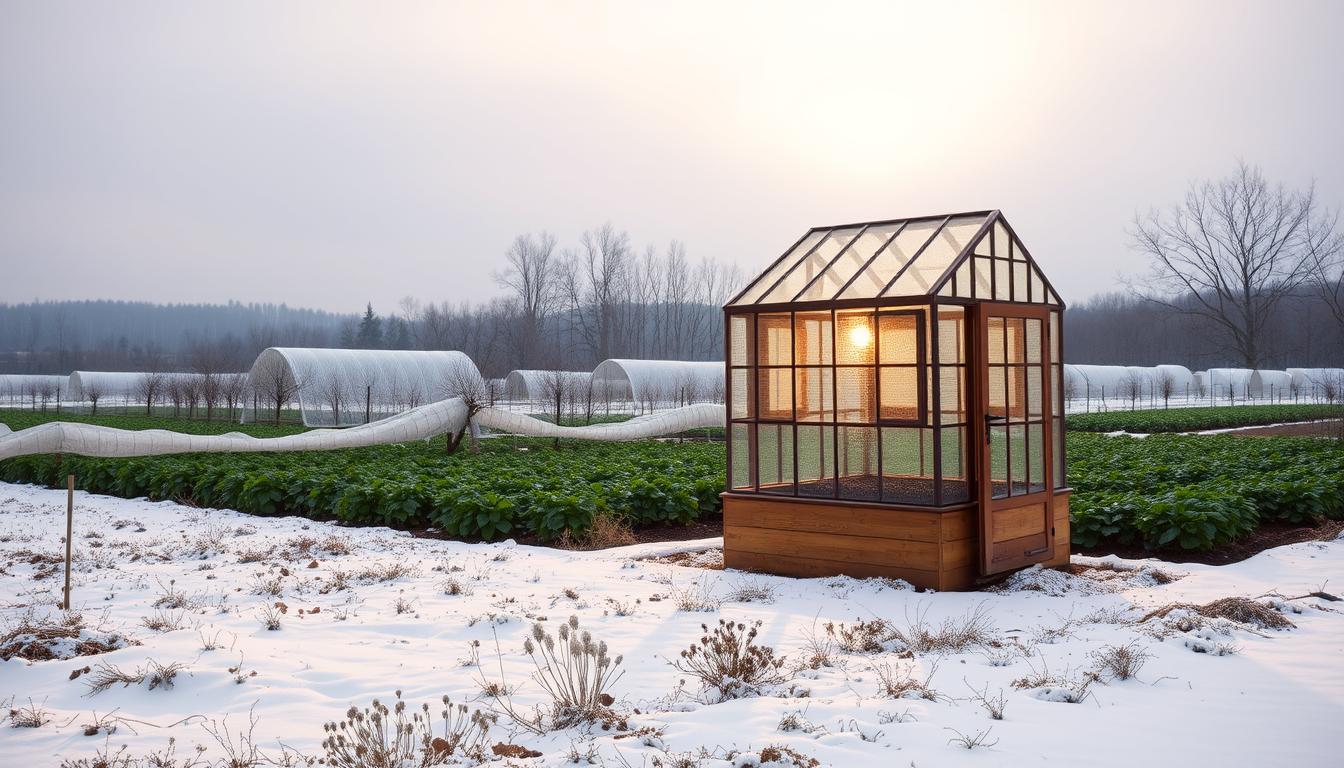
As the winter season comes, many gardeners think they can’t garden anymore. But, with the right tools and techniques, you can keep gardening even when it’s cold.
Row covers and cold frames are great for keeping your garden safe in winter. They let you grow many crops all year, even when it’s very cold.
With these methods, you can have a big harvest all year. Whether you’re new to gardening or have been doing it for years, learning about row covers and cold frames is key. It helps you get the most out of your garden.
Key Takeaways
- Row covers and cold frames extend the gardening season.
- These techniques protect crops from harsh winter conditions.
- Using row covers and cold frames allows for year-round gardening.
- They are effective for growing a variety of winter crops.
- Both methods are suitable for gardeners of all experience levels.
The Benefits of Winter Gardening
Winter gardening can change how you enjoy food with fresh, homegrown produce all year. Using season extension techniques like row covers and cold frames helps protect crops. This way, you can keep harvesting even when it’s cold.
This method boosts food security and supports eco-friendly gardening.
Year-Round Fresh Produce
Winter gardening lets you have fresh produce year-round. It keeps crops safe from frost and cold, extending the growing season. This means you get fresh veggies and herbs even in the coldest months.
This is great for those who love cooking with fresh ingredients. It helps when the traditional growing season is short.
Cost Savings and Sustainability
Winter gardening also saves money and is good for the planet. Growing your own food cuts down on supermarket costs. It can even lower your grocery bills.
Using season extension techniques like row covers and cold frames also saves energy. This makes your gardening more eco-friendly.
Understanding Season Extension Techniques
Gardening doesn’t have to stop when winter arrives. With the right techniques, you can extend the growing season. Season extension involves using various methods to protect plants from cold weather. This allows for a longer period of growth and productivity.
How Cold Weather Affects Plants
Cold weather can harm many plants, causing damage or death. Garden frost protection is key to keeping plants healthy during winter. Plants sensitive to frost may need extra protection to survive.
The Science Behind Season Extension
Season extension techniques create a microenvironment that shields plants from harsh winter conditions. This can be done with row covers, cold frames, and other protective measures. Using cloches for cold weather gardening is also effective, as cloches trap warm air and protect plants from frost.
Microclimates in Your Garden
Understanding microclimates in your garden can help you use season extension techniques better. A microclimate is a small area with unique environmental conditions. By identifying and using these microclimates, you can boost your garden’s productivity.
| Technique | Description | Benefits |
|---|---|---|
| Row Covers | Lightweight fabric covers that allow light and water to reach plants while protecting them from frost. | Easy to install, effective frost protection |
| Cold Frames | Structures with transparent roofs that trap sunlight and heat, protecting plants from cold weather. | Extends growing season, improves soil warmth |
| Cloches | Individual plant covers that trap warm air and protect from frost. | Effective for small plants, easy to use |
Types of Row Covers for Winter Protection
Gardeners wanting to grow plants longer need to know about row covers. These covers protect plants from cold weather. Choosing the right one is key to a successful winter garden.
Lightweight Floating Row Covers
Lightweight floating row covers are great for plants needing little protection. They let sunlight and water in while keeping pests and light frosts out. Made from polypropylene or polyester, they’re simple to put over plants.
Medium-Weight Row Covers
Medium-weight row covers offer better protection against cold. They work for more plants and can block frost up to 5°F (-15°C). These covers also let air and moisture through.
Heavy-Weight Frost Blankets
Heavy-weight frost blankets are the strongest option for extreme cold. They protect plants from very cold temperatures. But, they might need extra support to avoid damage from snow.
Choosing the Right Material for Your Climate
Choosing a row cover depends on your local weather. For warmer winters, light covers are enough. But, colder areas need stronger, more protective ones. Also, think about how durable, breathable, and UV-resistant the cover is. This ensures it works well all winter.
Building and Using Cold Frames Effectively
For gardeners wanting to grow longer, cold frames are a great choice. They are boxes with clear lids that capture sunlight and keep in heat. This creates a warmer spot than outside.
DIY Cold Frame Construction
Building a cold frame is a fun DIY project. You’ll need some basic materials and tools.
Materials and Tools Needed
You’ll need old windows, wooden planks, and a hinge to build a cold frame. Also, a drill, saw, and weatherproof glue are necessary.
Step-by-Step Building Instructions
Start by building the box with the wooden planks. Attach the old windows to the top with hinges. This lets you open the lid for air. Use weatherproof glue to seal any gaps.
Positioning Your Cold Frame for Maximum Sunlight
It’s important to place your cold frame where it gets lots of sunlight. Face it south to catch the most sunlight during the day.
Ventilation and Temperature Management
Good ventilation is key to avoid overheating in the cold frame. Open the lid on warm days to let out extra heat. You can also use automatic vent openers for easy use.
| Temperature Range | Ventilation Action |
|---|---|
| 40°F – 55°F | Partially open the lid |
| Above 55°F | Fully open the lid |
| Below 40°F | Keep the lid closed |
By following these tips, you can use cold frames to grow longer. Enjoy a more productive winter garden.
Using Row Covers and Cold Frames for Winter Gardening: Step-by-Step Guide
To get the most from your winter garden, learning about row covers and cold frames is key. These tools protect your crops from cold weather and pests.
Setting Up Row Covers
Row covers are a thin, breathable fabric. They let plants get sunlight and water but keep frost and pests away. To use them, just lay the fabric over your plants or beds.
- Make sure the cover is big enough to cover the plants without touching the leaves.
- Use bricks, stones, or special clips to hold the edges in place.
Securing Covers in Windy Conditions
In windy places, it’s important to keep row covers tight. Use extra weights or anchors to keep them from blowing away.
Creating Support Structures
For tall plants, make support structures with hoops or stakes. This keeps the row cover off the plants and prevents damage.
Installing and Managing Cold Frames
Cold frames are like mini-greenhouses. They trap warmth and protect plants from cold. To set up a cold frame, pick a spot that gets lots of sunlight.
- Place the cold frame facing south to get the most sunlight.
- Make sure it’s level and stable.
- Watch the temperature inside and open it if it gets too hot.
Combining Multiple Protection Methods
For the best protection, use row covers and cold frames together. This double layer keeps plants warm and safe from harsh weather.
By following these steps and using both row covers and cold frames, you can grow more in winter. Your garden will be more fruitful.
Best Winter Crops for Protected Cultivation
Winter gardening under protection opens up a world of possibilities. By using cloches for cold weather gardening and plant cover for cold weather, gardeners can enjoy fresh produce even in the coldest months.
Cold-Hardy Leafy Greens
Leafy greens like kale, spinach, and arugula are perfect for winter gardening. They are cold-hardy and thrive in cooler temperatures. For example, spinach can be harvested multiple times, providing a continuous yield throughout the winter.
Root Vegetables for Winter Harvest
Root vegetables such as carrots, beets, and radishes do well in cold frames. The soil remains unfrozen, allowing for winter harvest. Carrots, for instance, can be stored in the cold frame itself, providing a fresh supply as needed.
Herbs That Thrive Under Protection
Certain herbs, including parsley, cilantro, and sage, can be grown under protection during the winter. These herbs add flavor to winter dishes and benefit from the warmer microclimate. Parsley, for example, remains fresh and healthy under these conditions, providing a continuous supply.
Planning Your Winter Garden Layout
When planning your winter garden, consider the layout to maximize space and ensure plants get enough light. Companion planting is also beneficial, where certain crops are grown together to enhance growth or deter pests. For example, planting marigolds with tomatoes can help reduce nematodes.
By carefully selecting the right crops and using protection methods effectively, gardeners can enjoy a productive winter garden. Whether you’re a seasoned gardener or just starting out, protected cultivation offers a rewarding way to grow a variety of crops year-round.
Maintenance and Monitoring of Winter Protection Systems
Effective winter gardening needs regular upkeep and checks on protection systems. To keep your winter garden healthy, make sure row covers and cold frames are working well.
Daily and Weekly Maintenance Tasks
Keeping your winter garden thriving is all about regular care. Every day, check row covers and cold frames for damage. Also, watch the moisture levels and temperature changes. Weekly, inspect the cold frames for damage, look for pests, and make sure row covers are tight.
Temperature Monitoring Tools
It’s key to watch the temperature to protect your plants from cold. Use thermometers or sensors to track the temperature in cold frames and under row covers. This lets you act fast if the temperature gets too low, like adding more covers or opening cold frames.
Dealing with Snow and Ice
Snow and ice can be good and bad for winter gardens. They keep plants warm but too much can harm them. Clearing snow from covers and frames helps prevent damage. Also, watch out for ice, which can hurt plants.
By following these tips, your winter garden will stay healthy and give you fresh food all season. Enjoy your garden’s bounty, even in the coldest months.
Cost Considerations and Return on Investment
Row covers and cold frames are great for winter gardening. But, it’s key to know their cost and if they’re worth it. Think about the expenses and the benefits you might get.
Budget-Friendly DIY Options
Building your own row covers and cold frames can save money. You can use PVC pipes, wooden frames, and plastic. This way, you can make effective tools without spending a lot. For example, a DIY cold frame might cost between $50 and $100.
Commercial Products: Price Comparisons
Ready-made solutions are also available. Prices vary a lot, depending on quality and brand. A good row cover can be $20 to $50 for 100 square feet. Cold frames can cost from $100 to over $500. It’s important to compare prices and features.
Calculating Your Winter Garden ROI
Figuring out your winter garden’s return on investment is important. Think about the savings from fresh produce all year, the property value increase, and selling extra produce. As Gregory Reisch, a seasoned gardener, said,
“The best investment in gardening is the one that gives you the most joy and the freshest produce.”
With good planning, your winter garden can bring you a big return on investment.
Seasonal Transitions and Year-Round Planning
To keep your garden productive all year, understanding seasonal changes is key. Planning and action across seasons can greatly improve your winter gardening.
Fall Preparation for Winter Growing
As fall comes, getting your garden ready for winter is vital. Clean up, remove dead plants, and add organic matter to the soil. This improves its structure and fertility. Using plant covers for cold weather helps protect crops from frost and extends the growing season.
Also, check your cold frames and row covers to make sure they’re ready for winter. Good fall preparation is crucial for a successful winter garden.
Transitioning from Winter to Spring
When winter ends and spring begins, your garden needs careful management. Start by removing winter crop protection that’s no longer needed. This lets your plants enjoy the warmer weather.
Look for winter damage and fix it quickly. This is also a great time to plan your spring garden. Think about which crops to plant and how to rotate them for healthy soil.
Storing and Maintaining Equipment Off-Season
After winter, it’s important to store and maintain your gardening tools well. Clean your row covers and cold frames well, then store them in a dry, safe place.
| Equipment | Maintenance Task | Storage Tip |
|---|---|---|
| Row Covers | Clean with mild detergent | Store in a dry, dark place |
| Cold Frames | Inspect for damage, repair as needed | Cover with tarp to protect from elements |
By following these steps, your equipment will be ready for the next season. This saves you time and money.
Conclusion
Using row covers and cold frames can change the game for gardeners in cold areas. These methods protect your garden from frost. This way, you can have fresh produce all year, even in the coldest winters.
By following the tips in this article, you can make your winter garden flourish. It will not only survive but also grow strong during the cold months. Whether you’re experienced or new to gardening, using row covers and cold frames can lead to a great harvest.
Starting or continuing your winter gardening journey requires the right approach. Understanding and using the best techniques for your climate and garden is key. With the right tools and knowledge, you’ll soon enjoy the fruits of your labor.
